Analyzing US-China Rivalry and the Thucydides Trap Model
A thin but telling signal has appeared across the policy-information stack: a Mshale item frames US-China rivalry through global dominance and the “Thucydides Trap,” while adjacent sources point to…
Xavier Pennington, Lead Columnist, Systems & Macro-Trends·updated July 15, 2026
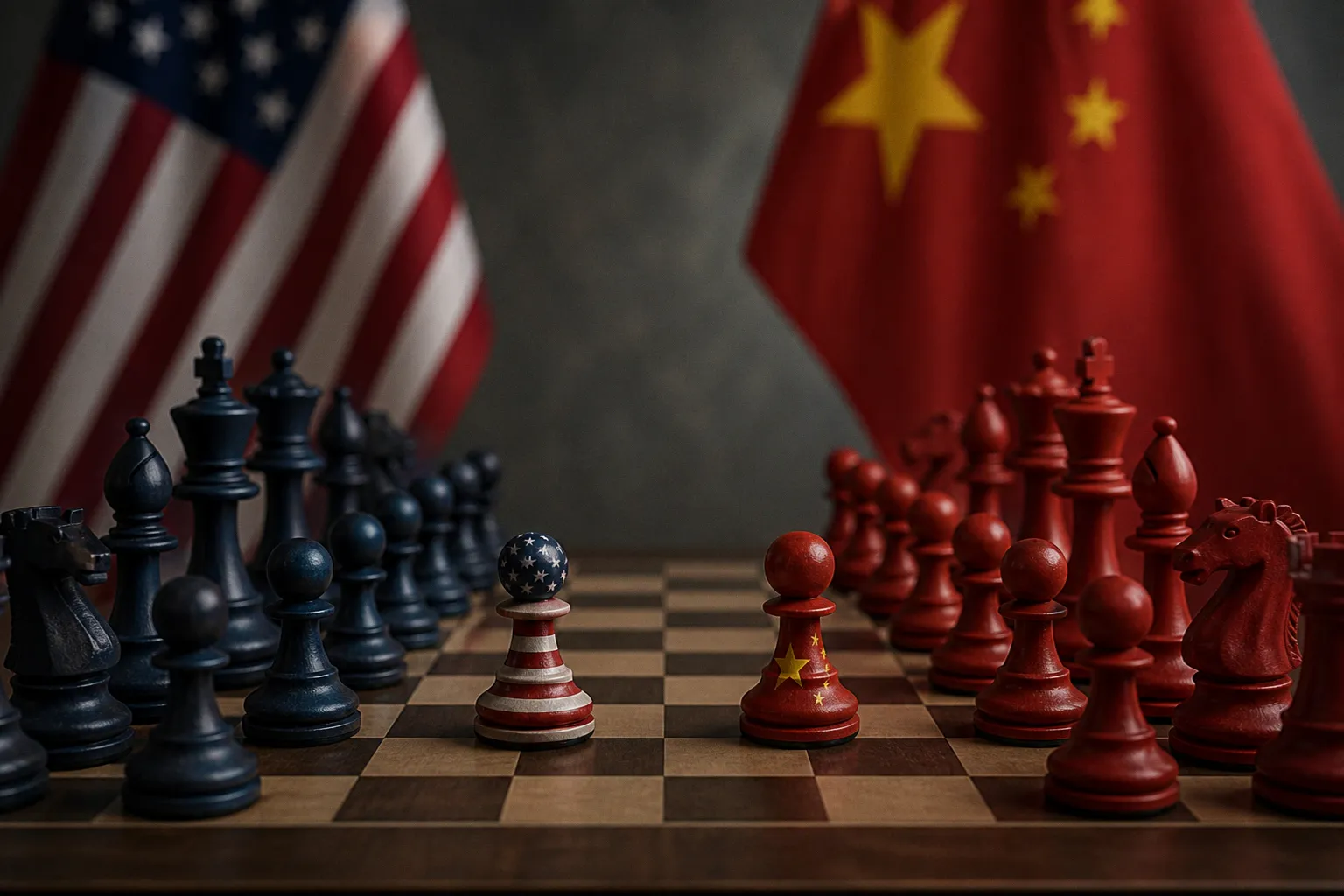
A thin but telling signal has appeared across the policy-information stack: a Mshale item frames US-China rivalry through global dominance and the “Thucydides Trap,” while adjacent sources point to the same analytical terrain — global political economy, adaptive regulation, and a “new global order” agenda. The facts available are limited, so the useful move is not to overstate the news. It is to inspect the machinery behind the framing: how power competition is being translated into education, governance, and forum-level debate.
The rivalry is being packaged as a systems problem
The Mshale item is presented as an explainer on US-China rivalry, global dominance, and the Thucydides Trap, associated with Jordan Romano. That title matters because it places the relationship inside a specific interpretive model: a rising power, an established power, and the structural risk generated by that collision.
But with only the headline and snippet available, we should not treat it as evidence of a new policy shift, diplomatic rupture, or military development. The safer reading is narrower: US-China competition remains a live explanatory frame in public-facing global affairs content. The phrase “global dominance” is doing heavy work. It signals that the rivalry is not being discussed merely as bilateral tension, but as a contest over system design.
For readers tracking macro trends, that distinction is essential. A bilateral dispute can be negotiated issue by issue. A systems rivalry creates feedback loops across trade, technology, finance, education, regulation, and alliances. The available evidence does not let us map those loops in detail. It does show that the rivalry is being positioned as a lens for understanding global order.
The education signal: politics and economics are converging
The Waseda source gives the most concrete detail in the pack. Its “Understanding Global Systems through Politics and Economics” item describes a Global Political Economy major built around the intersection of economics and political science. It emphasizes theoretical frameworks, quantitative analysis, and the task of forging meaningful connections between the two disciplines.
That is not a side note. It is the intellectual infrastructure required to understand great-power competition without reducing it to slogans. The quoted program description also points to a core mechanism: political realities can facilitate or hinder economic policy. In a US-China context, that is the central operating principle. Markets do not float above politics. Policy does not move without institutional constraints. Power competition turns those constraints into structural friction.
The practical implication is simple: readers should distrust single-variable explanations. “Trade,” “security,” “technology,” or “ideology” are rarely sufficient alone. The sharper question is how political constraints alter economic choices — and how economic pressures then reshape political room for maneuver. That is the loop to watch.
Regulation and forums are part of the same map
Two other signals sit around the rivalry frame. Florida Politics carries an item titled “Global Government Trends 2026,” noting Deloitte’s emphasis on a shift toward adaptive regulation. ANSA flags the Karpacz Economic Forum as focused on the new global order.
Again, the evidence is headline-level. No responsible analysis should invent the substance of Deloitte’s findings or the forum’s agenda beyond what is stated. Still, the adjacency is useful. “Adaptive regulation” and “new global order” are not decorative phrases. They point to governance systems under pressure: institutions trying to adjust faster than the forces reorganizing the environment around them.
That is where US-China rivalry becomes more than a geopolitical headline. If governments are moving toward more adaptive regulation, and economic forums are centering the new global order, then the relevant question is not only who is stronger. It is which systems can update under stress without producing cascading instability.
For a reader, the checklist is disciplined. First, separate confirmed developments from interpretive packaging. Second, track whether rivalry analysis is tied to institutions, regulation, and political economy rather than abstract dominance language. Third, watch the vocabulary used by universities, consultancies, and global forums. These institutions often reveal where elite consensus is moving before policy fully hardens.
The current evidence does not prove a new phase in US-China rivalry. It does show the rivalry being processed through the right analytical channels: global systems, political economy, adaptive governance, and debates over order. That is the level where the real contest is usually decided.