Watch how Europe quietly began building a military strategy that could one day stand without NATO
Europe's quiet military pivot has entered the open. A piece distributed this week frames the thesis plainly: the continent has begun constructing a strategic posture designed, in time, to function…
Xavier Pennington, Lead Columnist, Systems & Macro-Trends·updated July 08, 2026
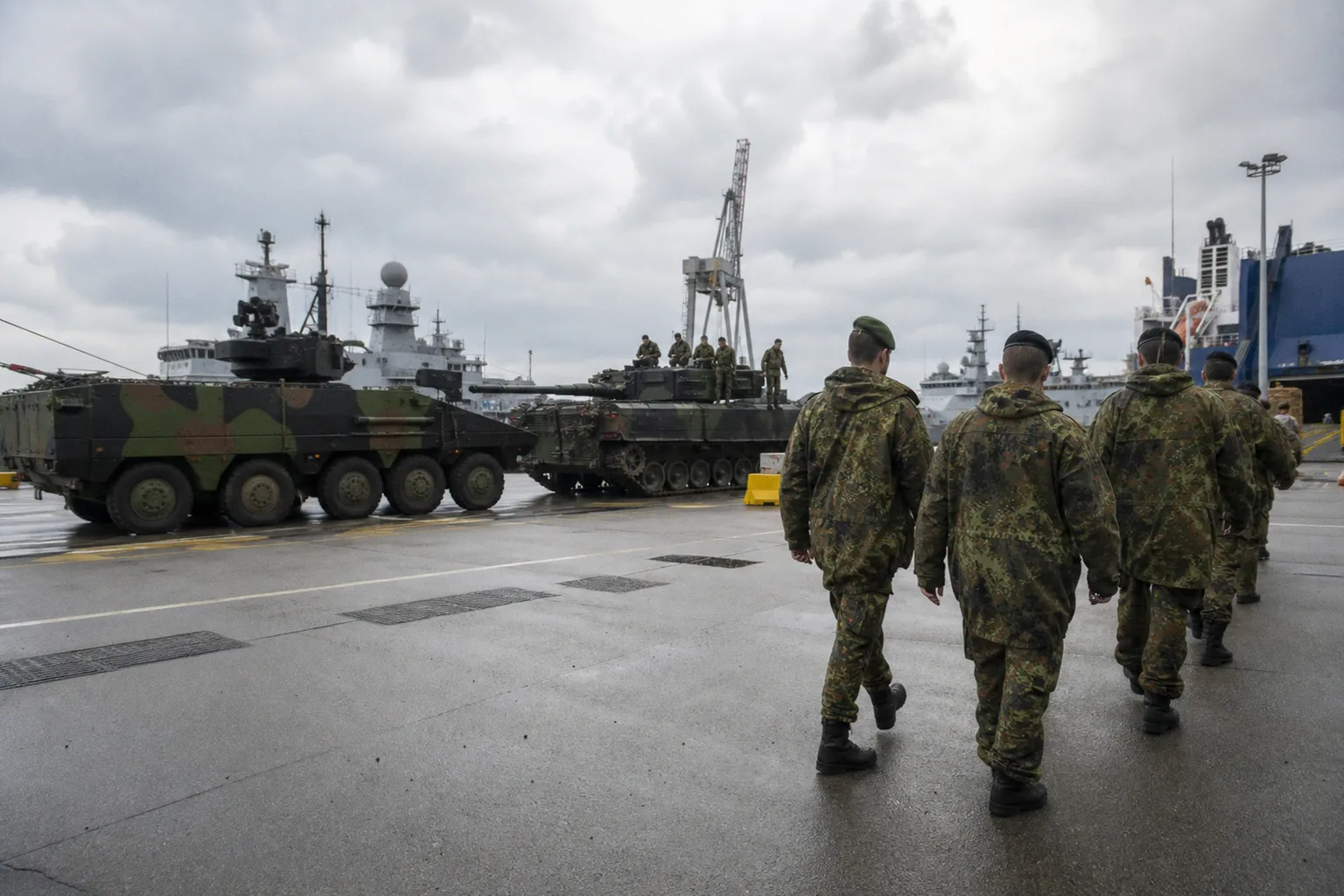
Europe's quiet military pivot has entered the open. A piece distributed this week frames the thesis plainly: the continent has begun constructing a strategic posture designed, in time, to function without the transatlantic scaffolding that has defined its defense posture since 1949. The framing matters as much as the substance. It arrives as pressure points across the broader system — Israeli preparations for a renewed Iran operation, Russian fuel logistics tightening under sanctions — are forcing structural questions the post-Cold War order avoided asking.
The signal is in the silence around specifics
The MSN visual report offers no operational details, budget figures, or force-structure data — only the thesis itself. That absence is the story. Strategic shifts of this scale typically enter public discourse through their finished infrastructure rather than their first principles. By surfacing the question of strategic autonomy as a deliberate project rather than a hypothetical for NATO failure, the framing inverts a default template that has held for decades: the assumption that European capability is derivative of, not parallel to, the alliance. No component costs, procurement timelines, or command arrangements appear in the publicly distributed material. The pattern of disclosure is itself a leading indicator worth tracking.
Pressure points converging in the same week
The European question sits inside a cluster of defense developments that share one underlying variable: the assumption that existing security architecture will hold. Per JFeed's reporting, Israeli defense officials are now conducting weekly reviews of operational plans against Iran, with Defense Minister Israel Katz stating the IDF is fully prepared for an immediate renewal of military operations. The same intelligence assessment notes the IRGC is actively rehabilitating its military apparatus despite economic strain, and that any Israeli response would be calibrated differently from previous rounds — targeting critical infrastructure to degrade regime capability rather than symbolic strikes.
Separately, Crypto Briefing's coverage tracks a parallel constraint: Russian fuel shortages now directly affecting the strategic calculus in Ukraine, with logistics failures reshaping battlefield tempo. The component pieces read as unrelated dispatches. Viewed as a system, they describe an architecture in which secondary powers are being forced into faster capability cycles — Europe hedging, Israel calibrating against a recovering adversary, Russia absorbing logistical friction that compresses its offensive window.
What the macro layer tells us to watch
The practical items that will reveal the real architecture are not deployments or headline exercises but quieter documents: defense budget supplementaries, munitions production disclosures, and bilateral pacts concluded outside existing alliance frameworks. Those will surface capability before the analysts confirm it. What we should track is not whether Europe can stand without NATO in abstract, but whether specific capability gaps — strategic lift, deep strike, integrated air defense — close on a measurable timetable. If they do, the thesis stops being a question and becomes a calendar.