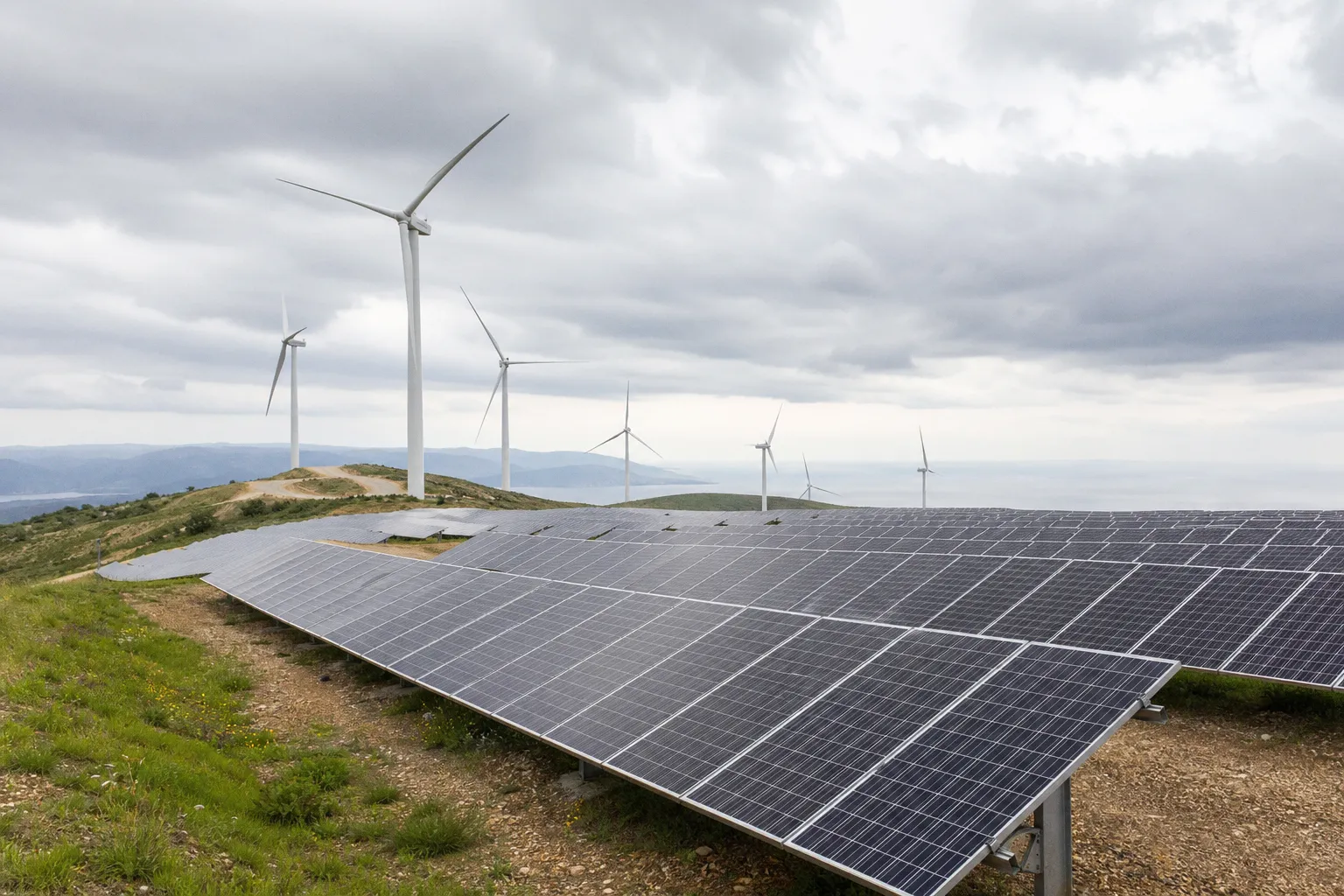
The green transition – benefits and barriers
Under the severe scenario in the June Eurosystem staff projections, HICP inflation in the euro area peaks above 6% in early 2027.
Xavier Pennington, Lead Columnist, Systems & Macro-Trends·updated July 03, 2026
A divergent transmission channel
ECB research presents a finding that should recalibrate how analysts interpret European growth cycles. When oil prices spike, European firms cut capital spending and R&D; American firms, by and large, do not. The asymmetry traces directly to Europe's greater reliance on imported fossil fuels. The same energy price shock that merely trims margins in Houston translates into a contractionary impulse across the euro area — a feedback loop in which geopolitical dislocation in the Strait of Hormuz restrains investment decisions in Frankfurt, Lyon and Milan within weeks.
That channel extends well beyond crude oil and gas. The same waters carry a substantial share of global helium and fertilizer supply, meaning disruption propagates into semiconductor manufacturing and food production. Climate change compounds the pressure through an independent channel: rising volatility in food prices worldwide that has nothing to do with any single conflict.
Sequencing, not substitution
The speech explicitly resists the temptation to bundle decarbonization and energy security into a single trade-off. The framing — "kill two birds with one stone" — oversimplifies. Delivering net zero in an orderly and relatively low-cost fashion requires predictable carbon pricing, faster permitting, grid expansion, contracts for industrial decarbonization, and demand-side flexibility. Each component addresses a distinct point of structural friction; removing any one creates bottlenecks elsewhere.
The baseline already reflects deterioration: euro-area growth revised down for 2026 and 2027, inflation revised up. Under the adverse scenario, 2027 growth falls 0.3 percentage points below baseline and inflation runs 0.7 percentage points higher. Policymaking under that uncertainty envelope — and the parallel decisions of firms and households — becomes the binding constraint. Capital expenditure retreating this year may not return fast enough to meet the milestones anchoring Europe's climate commitments.
Two catalysts have converged. Treating them as one problem misdiagnoses the structure.