Xavier Pennington, Lead Columnist, Systems & Macro-Trends
June 26, 2026 · 14 min read
Why We Must Track EU Sanctions on Russian LNG in 2025
The European Union did not ban Russian LNG. It banned a specific function around it: transshipment through EU ports to third countries. That distinction is not a footnote.
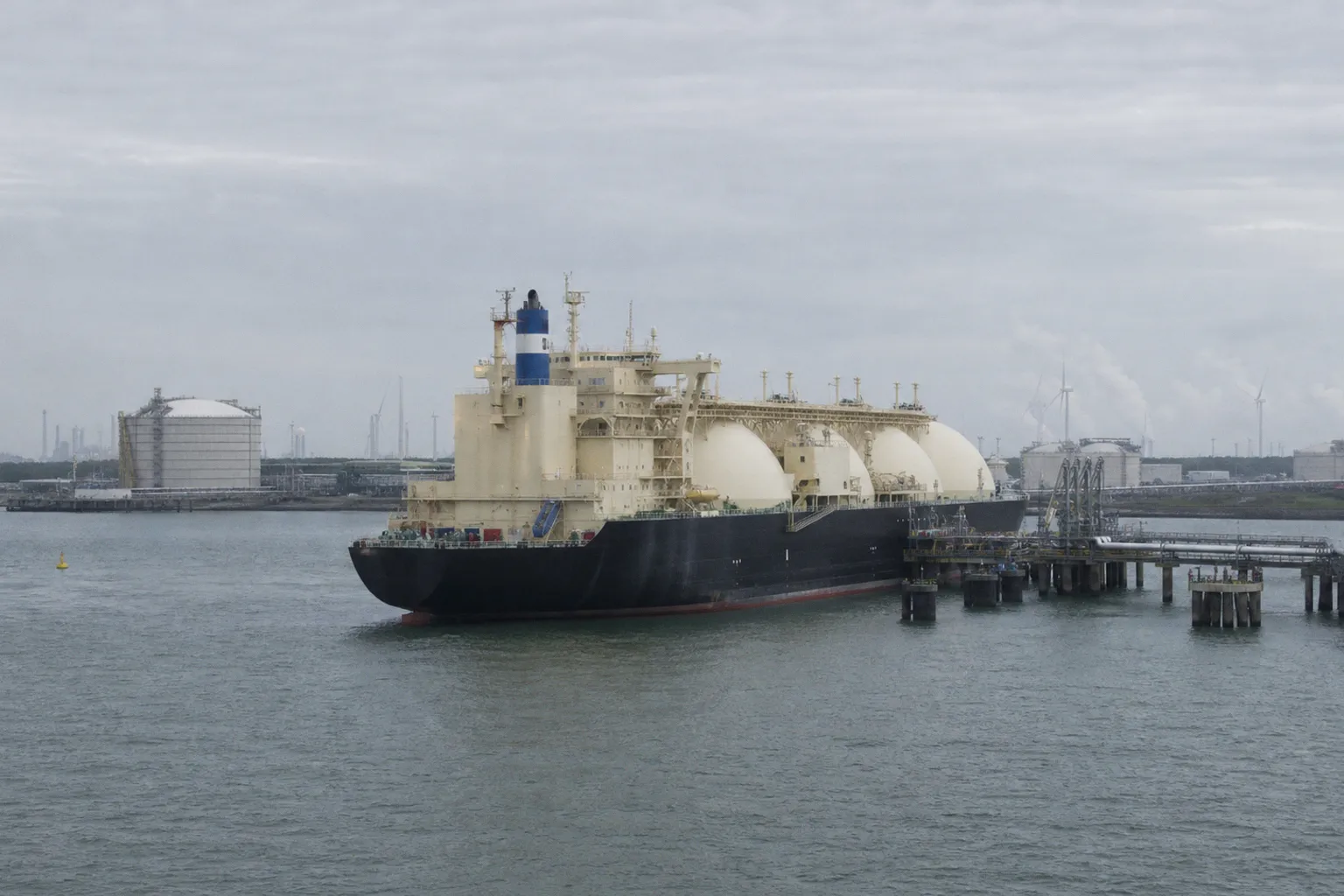
The March 2025 implementation deadline for key transshipment restrictions creates a narrow but consequential test. Europe is trying to reduce the utility of its own infrastructure to Russia’s export system without triggering a supply shock inside the bloc. That is a sophisticated policy design. It is also structurally fragile. If monitoring fails, the measure becomes symbolic pressure. If monitoring works, it begins to separate European energy security from Russian logistical leverage.
The 14th Package Is Not an Import Ban. That Is the Point.
The 14th EU sanctions package is frequently described in shorthand as an energy sanction. That is accurate but incomplete. Its design is more specific: it prohibits the transshipment of Russian LNG through EU ports to third countries, while direct imports of Russian LNG for EU consumption remain legal.
For related context, see Digital banking, neobanks & fintech.
This is the regulatory paradox at the center of the 2025 energy file. A cargo of Russian LNG can still enter an EU terminal for domestic use. What the package targets is the use of European terminals as logistical platforms for onward delivery elsewhere. The policy attacks the service layer, not the commodity in all circumstances.
That distinction matters for three reasons.
First, Europe is still managing the aftershocks of its pipeline gas rupture with Russia. The bloc has reduced dependence dramatically, but it has not removed Russian gas molecules from the system. In 2023, the EU imported approximately 18–20 billion cubic meters of Russian LNG, roughly 13–15% of total EU LNG imports. That is not systemic dominance. It is not trivial either.
Second, LNG is not pipeline gas with a different label. Its value chain is modular. Liquefaction plants, specialized vessels, regasification terminals, storage slots, ship-to-ship operations, destination clauses, and long-term contracts create multiple intervention points. A sanction can target one node without closing the entire network.
Third, the EU’s approach reflects a political constraint. A total LNG import ban would be cleaner on paper and riskier in execution. A transshipment ban is messier but more calibrated. It reduces European participation in Russia’s global export architecture while keeping a pressure valve for internal supply.
The sanction is not designed to make Russian LNG disappear overnight. It is designed to make European infrastructure less useful to Moscow’s export machine.
This is why tracking matters. The success or failure of the measure will not be visible in a single headline number. It will appear in route changes, terminal utilization patterns, contract adjustments, destination shifts, and the pricing behavior of replacement cargoes.
The Hubs Are the System: Zeebrugge and Montoir-de-Bretagne
The sanctions debate often treats “Europe” as a single intake valve. It is not. LNG enters through specific terminals with specific commercial histories and technical roles. In the Russian LNG case, the key entry points have included Spain, Belgium, and France, with hubs such as Zeebrugge in Belgium and Montoir-de-Bretagne in France sitting near the center of the logistical question.
Zeebrugge is especially important because LNG hubs do more than receive gas for domestic markets. They can provide storage, reloading, and transshipment services. A Russian LNG cargo arriving at such a terminal may be regasified and consumed in Europe, or it may be handled in ways that support onward movement. The 14th package is meant to shut down that second function for Russian LNG.
Montoir-de-Bretagne occupies a similar place in the sanctions architecture. France has remained one of the major entry points for Russian LNG into the EU. That does not automatically imply sanctions evasion; direct import for domestic consumption is still permitted. But it does mean that terminal-level data becomes geopolitically meaningful.
A useful way to read the 2025 pivot is to separate three categories of flow:
| Flow type | Legal position under the 14th package | Why it matters in 2025 |
|---|---|---|
| Russian LNG imported into the EU for domestic consumption | Still permitted | Keeps supply flexibility but preserves revenue channels to Russia |
| Russian LNG transshipped through EU ports to third countries | Prohibited after the transition period | Core target of the June 2024 sanctions package |
| Russian LNG rerouted through non-EU infrastructure | Not directly controlled by EU port rules | Tests whether sanctions displace flows or reduce their economic efficiency |
The third category is the one that will define the strategic outcome. Sanctions rarely eliminate trade immediately. They change its cost structure. A successful measure increases friction: longer routes, higher insurance costs, less convenient storage, more complex scheduling, higher dependence on alternative vessels, and reduced optionality.
The EU does not need every Russian LNG cargo to vanish for the policy to have an effect. It needs the Russian export system to lose logistical efficiency and market reach. That requires measurement at the level of ports, vessels, contracts, and destinations. Aggregate annual import figures will arrive too late and will hide too much.
The 18–20 BCM Dilemma
The core European dilemma is numerical before it is moral. Russian LNG represented roughly 18–20 bcm of EU imports in 2023. That is a manageable share in normal market conditions. It becomes more sensitive under stress: a cold winter, Asian LNG demand recovery, Norwegian maintenance disruptions, limited storage injections, or a price shock caused by geopolitical escalation elsewhere.
This is the structural reason the EU did not move directly to a comprehensive import ban. The bloc is balancing three objectives that do not naturally align:
1. Reduce Russian revenue. LNG sales create income streams that can support Moscow’s fiscal and strategic capacity. Even when the volumes are smaller than historic pipeline flows, the political signal and cash flow remain relevant.
2. Maintain European supply security. Energy systems punish abrupt purity. Removing a supply source without replacement can raise prices across the entire market, including for consumers and industries that never bought Russian LNG directly.
3. Preserve coalition unity. Sanctions are only as durable as the coalition behind them. A measure that lands unevenly across member states can produce political fatigue, exceptions, and enforcement gaps.
The transshipment ban is an attempt to thread those constraints. It does not force Spain, Belgium, or France to end all intake of Russian LNG immediately. It does, however, deny Russian sellers the ability to rely on EU ports as convenient export relay points.
This is a classic sanctions design problem. A broad embargo maximizes clarity but can create blowback. A targeted restriction reduces blowback but increases monitoring complexity. The EU chose complexity.
The choice is defensible. It is not self-executing.
For analysts, the key question is not whether Russian LNG still appears in Europe in 2025. It will. The better question is whether the nature of the flow changes. A sanctions regime that leaves domestic import volumes stable but sharply reduces re-export services may still achieve a strategic objective. Conversely, a regime that looks strict legally but allows equivalent flows through administrative ambiguity has little deterrent value.
This is where market data and geopolitical analysis converge. Vessel tracking, terminal usage, customs categories, storage patterns, and pricing spreads become indicators of political effectiveness. In energy sanctions, the operational layer is the policy layer.
A related analytical discipline comes from financial markets: watching not just headline earnings, but underlying flows, valuation assumptions, and balance-sheet dependencies. The same logic applies here; tools built for stock analysis and valuation exist because surface numbers rarely explain system behavior on their own. LNG sanctions require the same suspicion toward aggregates.
Circumvention Is Not a Loophole. It Is a Feedback Loop.
Every sanctions regime produces adaptation. That is not failure by itself. It is the normal response of a network under constraint. The important issue is whether the adaptation is cheap and scalable or expensive and brittle.
The possible circumvention pathways around Russian LNG restrictions are not identical. They vary in legal risk, operational complexity, and strategic significance.
One pathway is rerouting. If EU ports can no longer provide transshipment services, Russian LNG may seek alternative hubs outside the bloc. That can work, but it may add distance, congestion, and scheduling friction. LNG shipping is capital-intensive and timing-sensitive. A vessel sitting idle or taking a longer route is not just a vessel on a map. It is lost optionality.
Another pathway is contractual relabeling. LNG trade involves intermediaries, portfolio players, and destination flexibility. The question is not always whether a molecule can be identified in a politically satisfying way. The question is whether commercial documentation, destination changes, and ownership transfers obscure the operational reality. This is where enforcement capacity becomes decisive.
A third pathway is the emergence of harder-to-track fleets and opaque shipping practices. The phrase “dark fleet” is more established in oil than in LNG, because LNG carriers are technically specialized and harder to substitute. Still, the risk is directionally clear: as restrictions tighten, incentives rise for less transparent shipping structures. The exact volume of LNG shipments bypassing monitoring systems is not established. Treating it as known would be false precision. Ignoring the incentive would be naïve.
Sanctions do not end trade. They force trade to reveal where the hidden infrastructure is.
That revelation is useful. If Russian LNG flows shift from transparent EU-linked logistics into more opaque channels, the EU gains information about the next enforcement perimeter. If flows remain dependent on known terminals and counterparties, enforcement can become sharper. Either outcome improves policy intelligence, provided the data is tracked consistently.
The worst outcome is not necessarily continued Russian LNG presence. The worst outcome is analytical blindness: cargoes moving through adjacent systems while policymakers debate stale annual totals.
What Should Be Tracked in 2025
A serious monitoring framework should not reduce the issue to “imports up” or “imports down.” That binary is politically convenient and analytically weak. The 2025 sanctions test requires a layered dashboard.
The relevant indicators fall into several buckets:
- Terminal-level handling at EU ports. Zeebrugge, Montoir-de-Bretagne, and major Spanish terminals should be watched not only for Russian LNG intake, but for changes in reloads, storage duration, and onward services.
- Destination changes after March 2025. The transition period matters. The enforcement signal becomes clearer once the transshipment restrictions are fully in effect. Pre-deadline flows may reflect contract run-off rather than evasion.
- Russian LNG cargo routing. If cargoes previously handled through EU hubs begin moving through alternative infrastructure, the cost and reliability of those routes should be assessed. Displacement is not the same as neutralization.
- EU domestic consumption patterns. If direct imports remain legal, then member-state dependence must be measured honestly. A fall in transshipment activity paired with stable domestic import volumes tells a different story than a broad decline.
- Price spreads and replacement costs. Sanctions that reduce Russian revenue while imposing moderate European costs are more sustainable than measures that trigger severe internal price pressure.
- Contractual behavior. Long-term contracts, destination flexibility, and portfolio trading can blur the line between commercial continuity and strategic dependence.
This framework matters because sanctions are iterative. The June 2024 package was not the final state of EU energy policy. It was a move in a longer game of pressure, adaptation, and recalibration. The data gathered in 2025 will determine whether the next step is a tighter LNG import regime, a broader service ban, a more aggressive shipping enforcement strategy, or a slower managed phase-down.
There is also a diplomatic dimension. The EU’s credibility as a sanctions actor depends on implementation discipline. Announcing restrictions is easy. Maintaining them across member states with different energy exposures is harder. If the bloc cannot enforce a narrow transshipment ban, its leverage in future energy negotiations weakens. If it can, it demonstrates that targeted sanctions can alter strategic logistics without immediate self-harm.
The Difference Between Symbolic Pressure and Structural Pressure
Symbolic pressure changes language. Structural pressure changes incentives.
The 14th sanctions package can become either. If Russian LNG continues to use EU-adjacent services through technical workarounds, the policy becomes a reputational instrument with limited economic bite. If the ban forces Russian exporters into more expensive, less reliable, less liquid logistics, the measure becomes structural.
The distinction can be observed through several effects.
A structural sanction should create measurable friction. Cargoes may take longer to reach final buyers. Alternative hubs may charge more or lack capacity. Shipping schedules may become less efficient. Buyers may demand discounts for political and logistical risk. Insurers and financiers may price exposure differently. None of these effects needs to be dramatic alone. Together they can compress the strategic value of exports.
A symbolic sanction, by contrast, produces legal compliance without system change. Documents adjust. Routes are relabeled. Volumes remain economically equivalent. Political actors claim success because a prohibited category has declined, while the underlying revenue mechanism survives.
This is why the EU must resist the temptation to assess the policy too early or too narrowly. March 2025 is not a finish line. It is the start of the observable enforcement phase. The meaningful dataset will accumulate over months: spring maintenance cycles, summer storage injections, winter procurement, and global LNG demand shifts.
Energy sanctions also interact with external market conditions. If global LNG supply is loose, Europe can tighten restrictions with less pain. If supply is tight, every sanction becomes more politically expensive. That does not invalidate sanctions. It means timing and sequencing matter.
The most effective policy will likely be incremental. First, restrict transshipment. Then measure displacement. Then identify new nodes of dependence. Then decide whether direct imports, shipping services, financing, or contract structures require further action. This is not dramatic. It is how durable pressure is built.
Why 2025 Will Define the Next Phase of European Energy Sovereignty
The Russian LNG question is not only about Russia. It is about whether Europe can govern its own infrastructure in a contested global system.
For years, European energy policy assumed that interdependence would moderate geopolitical risk. That assumption failed under pipeline gas dependence. LNG was supposed to provide flexibility, and in many respects it did. But flexibility without governance becomes another dependency channel. Ports, storage tanks, regasification capacity, and trading desks are strategic assets. They can stabilize Europe, or they can serve external leverage.
The 2025 sanctions regime is therefore a test of administrative seriousness. Can the EU distinguish between domestic supply needs and export facilitation? Can it enforce that distinction across ports and member states? Can it track adaptations without overstating certainty? Can it tighten pressure without fragmenting its own coalition?
Those questions are more important than the rhetorical purity of an immediate total ban.
A clean ban would satisfy the demand for clarity. It might also create avoidable internal stress if imposed without sufficient replacement capacity and political alignment. A targeted ban is less emotionally satisfying but potentially more effective if executed with discipline. It attacks a logistical function. It preserves room for supply management. It generates data for escalation.
The risk is complacency. Policymakers may treat the adoption of the 14th package as the achievement. It is not. The achievement, if it comes, will be visible only in the behavior of the system after the deadline: fewer EU-enabled re-exports, higher friction for Russian logistics, clearer member-state exposure, and a more credible foundation for future restrictions.
That is why we must track EU sanctions on Russian LNG in 2025. Not because every cargo is decisive. Not because the policy is simple. Precisely because it is not simple.
The EU has moved from dependence to selective constraint. That is progress, but it is also a more demanding phase. In the pipeline era, the vulnerability was obvious. In the LNG era, the vulnerability is distributed through contracts, ports, ships, storage rights, and destination options. The battlefield is administrative and logistical.
The final measure of the 14th package will not be the legal text adopted in June 2024. It will be the pattern of flows after March 2025. If Europe can see those flows clearly, it can govern them. If it cannot, the sanctions architecture will have a blind spot exactly where Russia’s export system needs one.