UN General Assembly Navigates Structural Friction Over Key Appointments and Policy
According to UN Meetings Coverage, the General Assembly’s latest sitting combined a contested institutional decision with a broader package of draft texts on sustainable development, peace and international law.
Xavier Pennington, Lead Columnist, Systems & Macro-Trends·updated July 28, 2026
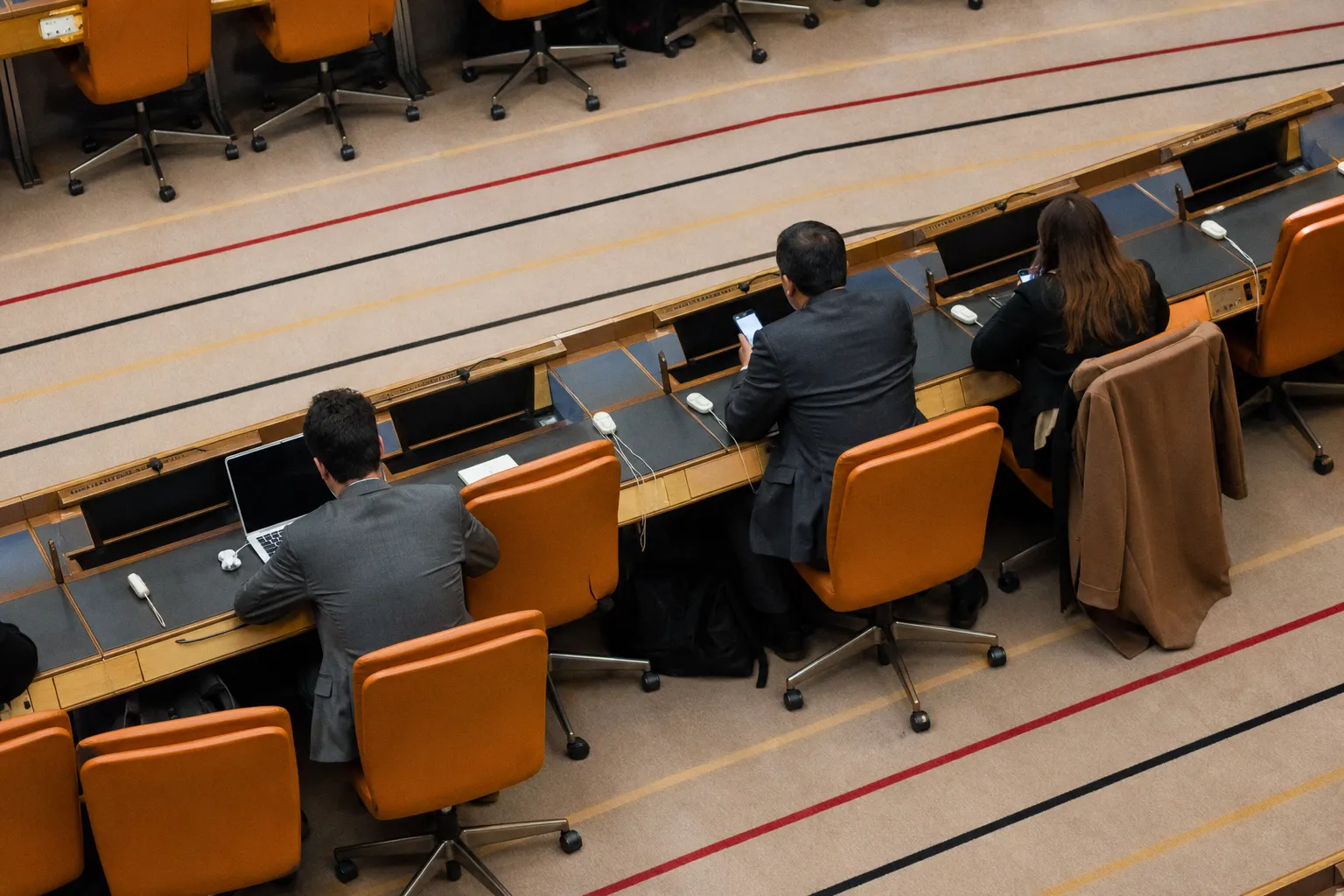
The immediate signal is not procedural trivia: it is a reminder that multilateral governance now operates through visible structural friction, even when members still converge on parts of the agenda.
The meeting followed the Secretary-General’s proposal to reappoint Volker Türk as High Commissioner for Human Rights for another four-year term beginning in October 2026. The Assembly also considered texts across several policy domains, while a separate report said it had declared 2028 the International Year of International Law.
A senior UN post becomes a procedural fault line
The High Commissioner’s office was created by the General Assembly in 1994. Türk was appointed in 2022 for a four-year term ending on 11 October 2026; the proposed renewal would run until 11 October 2030.
Before the Assembly considered that renewal, the United States sought a postponement, arguing that there had been limited opportunity for meaningful consideration. The motion failed: 63 delegations voted against it, 27 in favour and 47 abstained.
Russia then proposed a sharply shorter extension through the end of 2026, arguing that aligning the High Commissioner’s tenure with that of the current Secretary-General would preserve room for the next Secretary-General’s own institutional direction. The European Union, represented by Ireland, rejected that logic, stressing that an 81-day term would be incompatible with the scope of the position. Uruguay and Mexico supported the Secretary-General’s four-year proposal, while Israel, the Democratic People’s Republic of Korea and the United States voiced objections on different grounds.
The mechanism matters more than the rhetoric. A post designed for continuity is being pulled into disputes over succession, legitimacy and political control. That feedback loop can weaken institutions even without formally changing their mandates.
International law moves from background principle to declared agenda
Alongside the personnel dispute, the Assembly adopted draft texts concerning sustainable development, peace and international law, according to the UN’s official coverage. The reported designation of 2028 as the International Year of International Law gives that final category a more visible political marker.
Such declarations do not, by themselves, create enforcement capacity. Their function is different: they set an agenda, concentrate diplomatic attention and supply a common frame for later resolutions, meetings and national positioning. The gap between symbolic consensus and operational follow-through remains the central variable.
For governments, companies and investors, the practical task is to watch what follows the declaration rather than treating it as an endpoint. New UN language can become an early catalyst for debates over standards, supply-chain exposure, sanctions, dispute resolution or public commitments. Those mapping cross-border risk can place this diplomatic signal alongside stock-market and fund analysis—not as a trading cue, but as part of the broader political infrastructure shaping market assumptions.
What to track next
Three questions will determine whether this session produces cascading effects. First, whether the dispute around the High Commissioner’s reappointment alters how member states handle senior UN appointments. Second, whether the international-law initiative develops into concrete programmes rather than ceremonial programming. Third, whether the sustainable-development and peace texts generate follow-up mechanisms with identifiable responsibilities.
The Assembly has demonstrated that agreement remains possible. It has also made the cost of reaching it more explicit.