Xavier Pennington, Lead Columnist, Systems & Macro-Trends
July 23, 2026 · 11 min read
Carbon emissions meaning: how the definition is evolving
“Carbon emissions” once described a relatively simple quantity: carbon dioxide released when coal, oil, or gas is burned.
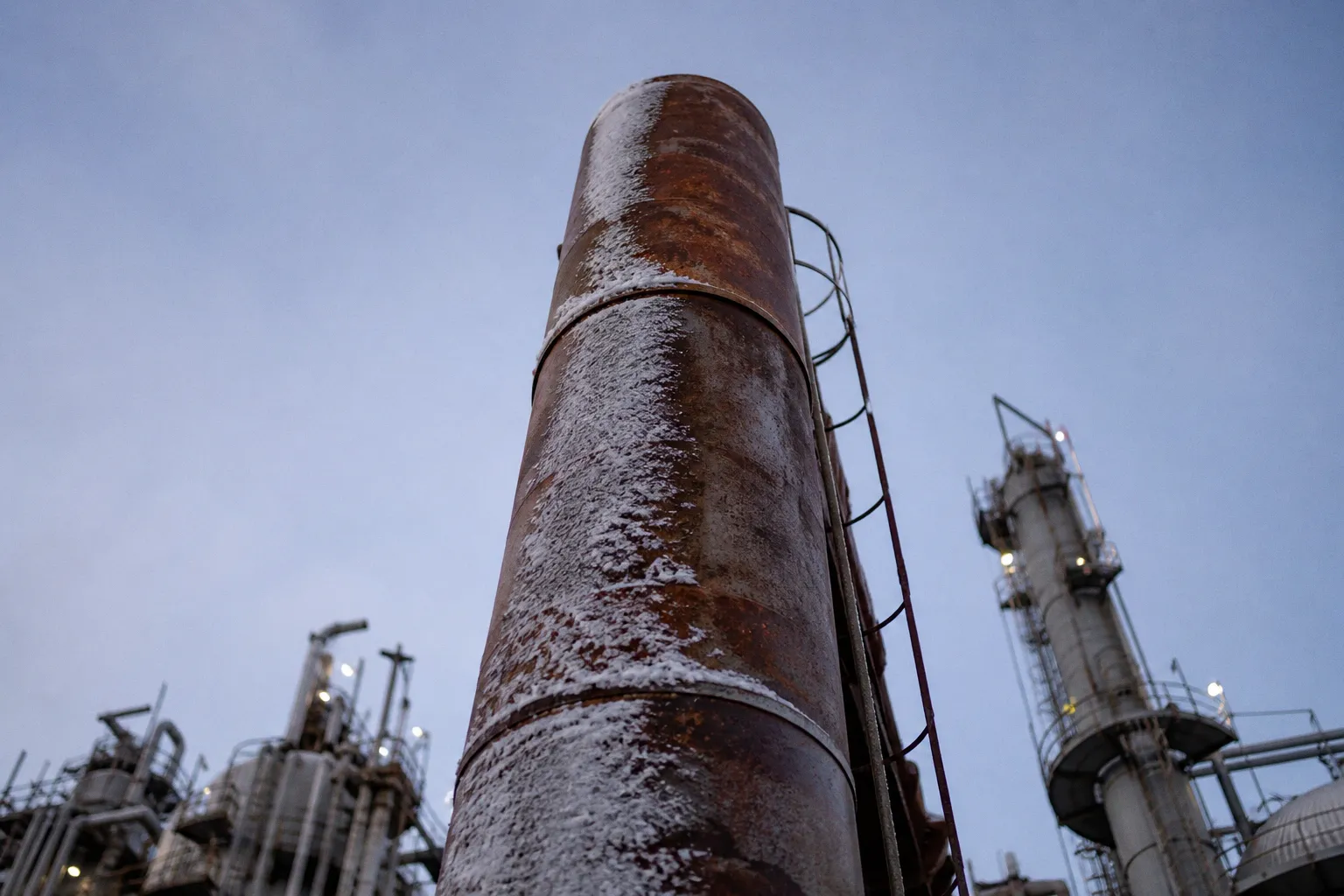
That definition is now inadequate for nearly every serious policy, investment, procurement, or corporate reporting decision.
The modern carbon emissions meaning is broader, more technical, and considerably less forgiving. It incorporates methane from oil and gas systems, nitrous oxide from fertilizer use, emissions embedded in steel and cement, electricity consumed by suppliers, and even the emissions created when a product reaches its end of life. A company can cut fuel use at its own facilities and still leave most of its climate impact untouched.
This is not semantic inflation. It is a structural correction. Climate accounting has had to follow the emissions system as it actually operates: across supply chains, grids, farms, construction sites, logistics networks, and consumer behavior. The result is a transition from counting smokestacks to mapping value chains.
Beyond carbon dioxide: why CO2e became the operating metric
The literal answer to “what are carbon emissions?” remains straightforward: gases released through human activity that contribute to atmospheric warming. But the practical answer uses a different unit—carbon dioxide equivalent, or CO2e.
CO2e converts different greenhouse gases into a common measurement based on their global warming potential, or GWP. It allows an organization, a city, or a national inventory to aggregate gases that warm the planet differently and persist in the atmosphere for different periods.
Carbon dioxide remains the reference gas. But it is not the entire ledger.
Methane, for example, has a 100-year global warming potential roughly 27 to 30 times higher than carbon dioxide under the IPCC’s Sixth Assessment Report framework. Nitrous oxide has an even larger 100-year GWP: 273. These figures do not mean that a tonne of methane and a tonne of CO2 behave identically. They do not. They mean climate accounting needs a shared conversion framework to compare their warming effects.
| Greenhouse gas | Typical major sources | 100-year global warming potential |
|---|---|---|
| Carbon dioxide (CO2) | Fossil fuel combustion, cement production, land-use change | 1 |
| Methane (CH4) | Oil and gas systems, coal mining, livestock, landfills | Approximately 27–30 |
| Nitrous oxide (N2O) | Agricultural soils, fertilizer use, industrial processes | 273 |
The conversion is useful, but it introduces a critical discipline: a lower CO2 total does not necessarily mean a lower climate impact if methane or nitrous oxide is rising elsewhere in the system.
This is particularly relevant in sectors that once sat outside the public image of “carbon.” Agriculture is not defined primarily by smokestacks, yet fertilizer-related nitrous oxide and livestock methane place it squarely within greenhouse gas accounting. Waste systems may appear peripheral to energy policy, but landfill methane can materially alter a city’s emissions profile. Gas infrastructure may be marketed as lower-carbon than coal at the point of combustion while leakage changes the wider calculation.
The phrase “carbon emissions” survives because it is convenient. CO2e is the more accurate operating language.
Carbon is no longer a single gas in climate accounting. It is a measurement system for comparing several warming forces across one economic architecture.
That shift has consequences for public debate. When a company advertises a reduction in “carbon,” the immediate question is no longer merely how much CO2 it emitted from fuel combustion. The relevant questions are: which gases, which boundary, which time horizon, and which activities were included?
Without those parameters, the number is often directionally interesting but analytically incomplete.
The three scopes: where the emissions actually sit
The most influential framework for understanding carbon footprint accounting is the Greenhouse Gas Protocol, established in 1998 and developed into the dominant structure for corporate greenhouse gas inventories. Its central contribution was not a new conversion factor. It was a boundary map.
The protocol organizes emissions into three scopes.
| Scope | What it covers | Typical examples | Core analytical problem |
|---|---|---|---|
| Scope 1 | Direct emissions from sources a company owns or controls | On-site fuel combustion, company vehicles, industrial process emissions | Usually most visible and most controllable |
| Scope 2 | Indirect emissions from purchased energy | Electricity, steam, heating, cooling | Depends heavily on grid composition and accounting method |
| Scope 3 | Other indirect value-chain emissions | Purchased materials, transport, business travel, product use, disposal | Broadest category; data quality and attribution are difficult |
Scope 1 is where conventional corporate carbon accounting began. A factory burns fuel. A fleet consumes diesel. A refinery processes hydrocarbons. The emissions occur within a company’s operational perimeter and can generally be measured from fuel records, meters, and process data.
Scope 2 expanded the frame. A company may run electrically powered operations with little direct combustion, yet its electricity demand can still be associated with substantial emissions depending on how the grid generates power. Electrification changes the location of emissions before it changes their total volume. That distinction matters.
Scope 3 is where the accounting system encounters the real economy.
For many businesses, value-chain emissions account for more than 70% of the total carbon footprint. A consumer goods company may have modest direct emissions from offices and warehouses while its agricultural inputs, packaging, contract manufacturing, transport, retail refrigeration, and product disposal dominate the inventory. A technology company can operate data centers on low-carbon electricity while the manufacturing of servers, semiconductors, and devices carries a large embedded footprint. An automaker’s downstream emissions may depend heavily on how customers use vehicles over many years.
The category is not difficult because it lacks importance. It is difficult because no single entity controls it.
A Scope 3 calculation often relies on supplier data, industry averages, spend-based estimates, lifecycle models, and assumptions about future product use. This creates structural friction. The data is necessarily less uniform than a fuel invoice. Double counting can occur across organizations. The same physical emissions may appear in one company’s Scope 1 and another company’s Scope 3. That is not automatically an error; the scopes are designed to reveal responsibility and exposure at different points in a value chain, not to construct one universally additive corporate total.
The practical mistake is to treat Scope 3 as optional merely because it is imprecise. Imperfect measurement does not erase economic reality. It identifies where the measurement system still needs better data.
Carbon footprint is becoming a supply-chain question
Understanding carbon footprint increasingly means understanding procurement.
A business that purchases aluminum, cement, chemicals, food ingredients, freight services, or electronic components is not simply buying products. It is selecting an emissions profile embedded in industrial processes upstream. The price signal captures only part of that profile. Climate reporting is forcing the remainder into view.
Construction offers the clearest example. Operational emissions—the energy consumed when a building is occupied—have historically dominated building policy. But embodied carbon has become a critical metric: emissions from extracting, manufacturing, and transporting materials before the building opens.
Cement, steel, glass, insulation, structural timber, façade systems, and construction logistics all enter the initial carbon balance. A highly efficient building can therefore begin operation with a substantial emissions debt already locked in.
This does not make operational efficiency irrelevant. It changes the sequence of analysis. A building’s climate performance must be assessed across its lifecycle rather than through its utility bills alone.
The same logic travels across sectors:
1. Material choice becomes a climate decision. Switching to lower-emissions steel, recycled inputs, alternative binders, or less material-intensive design can reduce emissions before operational controls even begin.
2. Supplier engagement becomes infrastructure. A buyer’s target has limited value if suppliers lack access to renewable electricity, process innovation, methane controls, or credible measurement systems.
3. Product design determines downstream emissions. Durability, repairability, energy efficiency, refill systems, transport weight, and end-of-life treatment alter the emissions profile long after the point of sale.
4. Capital allocation follows the data boundary. Once value-chain emissions are visible, procurement teams, product engineers, finance departments, and logistics managers all become participants in climate strategy.
This is why carbon accounting has migrated from sustainability reports into operating models. Its purpose is no longer only disclosure. It is diagnosis.
The largest emissions source is frequently not the asset a company owns, but the system it depends on to produce, move, and sell.
Net zero is not carbon neutrality with a new label
The language around targets has evolved as rapidly as measurement. “Carbon neutral” was once the dominant corporate claim. In its weakest form, the model was simple: estimate emissions, purchase offsets, declare balance.
That model has lost credibility because it can preserve the underlying emissions system while shifting the claimed remedy elsewhere. Offsets may have a role, but they do not make direct reductions optional. A company cannot credibly present continued high emissions as equivalent to a transformed operating model merely because it financed a separate project.
The modern net-zero framework imposes a more demanding sequence.
The Science Based Targets initiative’s Corporate Net-Zero Standard, launched in 2021, defines net zero around deep reductions first. Organizations are expected to reduce emissions by roughly 90–95%, then use carbon removals to neutralize the residual 5–10% that remains. The distinction is not cosmetic.
| Claim | Underlying logic | Main vulnerability |
|---|---|---|
| Carbon neutrality | Emissions may be balanced through credits or offsets, depending on the claim’s methodology | Can obscure limited direct emissions reductions |
| Net zero | Deep absolute emissions cuts precede neutralization of residual emissions | Requires operational change across difficult value-chain categories |
| Climate neutrality | Used in varied ways across jurisdictions and organizations | No universal legal or technical definition |
Net zero is therefore a hierarchy of interventions, not a purchasing strategy. The first task is to avoid emissions where possible. The second is to reduce what cannot be avoided immediately. The third is to address residual emissions with removals after the reduction pathway has been exhausted to the required extent.
That order matters because the climate system responds to physical emissions, not to corporate vocabulary.
The Paris Agreement, adopted in 2015, reinforced the global direction of travel by establishing the long-term objective of balancing emissions sources and removals in the second half of the century. The widely cited 2050 horizon functions as a global reference point, but it does not eliminate near-term accountability. Delayed reductions create cumulative emissions in the intervening years. In climate terms, timing is part of the quantity.
A distant pledge with no short-term reduction pathway is not a transition plan. It is an accounting narrative awaiting an operating model.
The regulatory gap is narrowing, but not uniformly
Carbon reporting now sits in an unstable middle stage. The vocabulary has become more rigorous faster than regulation has become consistent.
Some jurisdictions and reporting systems place greater emphasis on Scope 1 and Scope 2 because the data is comparatively accessible. Others are expanding expectations around value-chain disclosures. Requirements vary by country, sector, company size, listing status, and legal framework. Scope 3 reporting should not be described as universally mandatory. It is not.
But the direction is clear even where formal mandates remain uneven. Investors, lenders, insurers, public procurers, and large corporate buyers increasingly require emissions data because they are trying to quantify transition risk, supply-chain exposure, and future compliance costs.
This creates a familiar market anomaly. Companies with the most polished climate communication are not necessarily those with the most complete emissions information. In some cases, firms with broad Scope 3 disclosure appear worse on paper precisely because they have measured more of the system. A competitor reporting only direct fuel and electricity emissions may present a smaller footprint while omitting the larger categories.
The number alone is not enough. Boundary definition is the diagnostic layer beneath the number.
A credible emissions disclosure should clarify:
- whether results are expressed in CO2 or CO2e;
- which gases and activities are included;
- whether Scope 1, 2, and 3 are separated;
- how purchased electricity is treated;
- which Scope 3 categories are material and which remain estimated;
- whether the target is based on absolute reductions or intensity metrics;
- how offsets or removals are used, if they are used at all.
Intensity targets deserve particular scrutiny. Reducing emissions per unit of revenue, product, or energy output can be useful. Efficiency matters. But an intensity improvement can coexist with rising total emissions if production expands faster than the efficiency gain. Absolute emissions reveal the atmospheric result. Intensity reveals operational efficiency. Both can be valid; neither should be used to conceal the other.
The definition is evolving because the economy is being measured more honestly
The modern carbon emissions definition has moved through three successive corrections.
First, it expanded from carbon dioxide to greenhouse gases measured in CO2e. This corrected the chemical boundary.
Second, it expanded from direct operations to Scopes 1, 2, and 3. This corrected the organizational boundary.
Third, it is shifting from offset-led neutrality claims to reduction-led net-zero standards. This corrects the strategic boundary.
Each change makes the accounting process more difficult. It also makes it more useful.
There will not be a perfectly frictionless carbon ledger. Scope 3 data will retain uncertainty. Global warming potential values will continue to be refined as climate science advances. Legal language around “carbon neutral” and “climate neutral” will remain uneven across jurisdictions. These are not reasons to retreat to the simpler definitions of the past.
They are reasons to state assumptions plainly and follow the emissions through the system rather than stopping at the corporate gate.
Carbon emissions no longer mean what leaves a chimney. They mean the greenhouse-gas consequences attached to an economic activity, measured across its full chain of cause and effect. That definition is harder to market around. It is also much closer to the problem climate policy is actually trying to solve.