Xavier Pennington, Lead Columnist, Systems & Macro-Trends
July 19, 2026 · 14 min read
Biotechnology breakthroughs: the shift toward programmable life
The central biotechnology breakthroughs of this decade are not defined by a single drug, a single genome editor, or a single machine-learning model. They are defined by a change in the production system of biology.
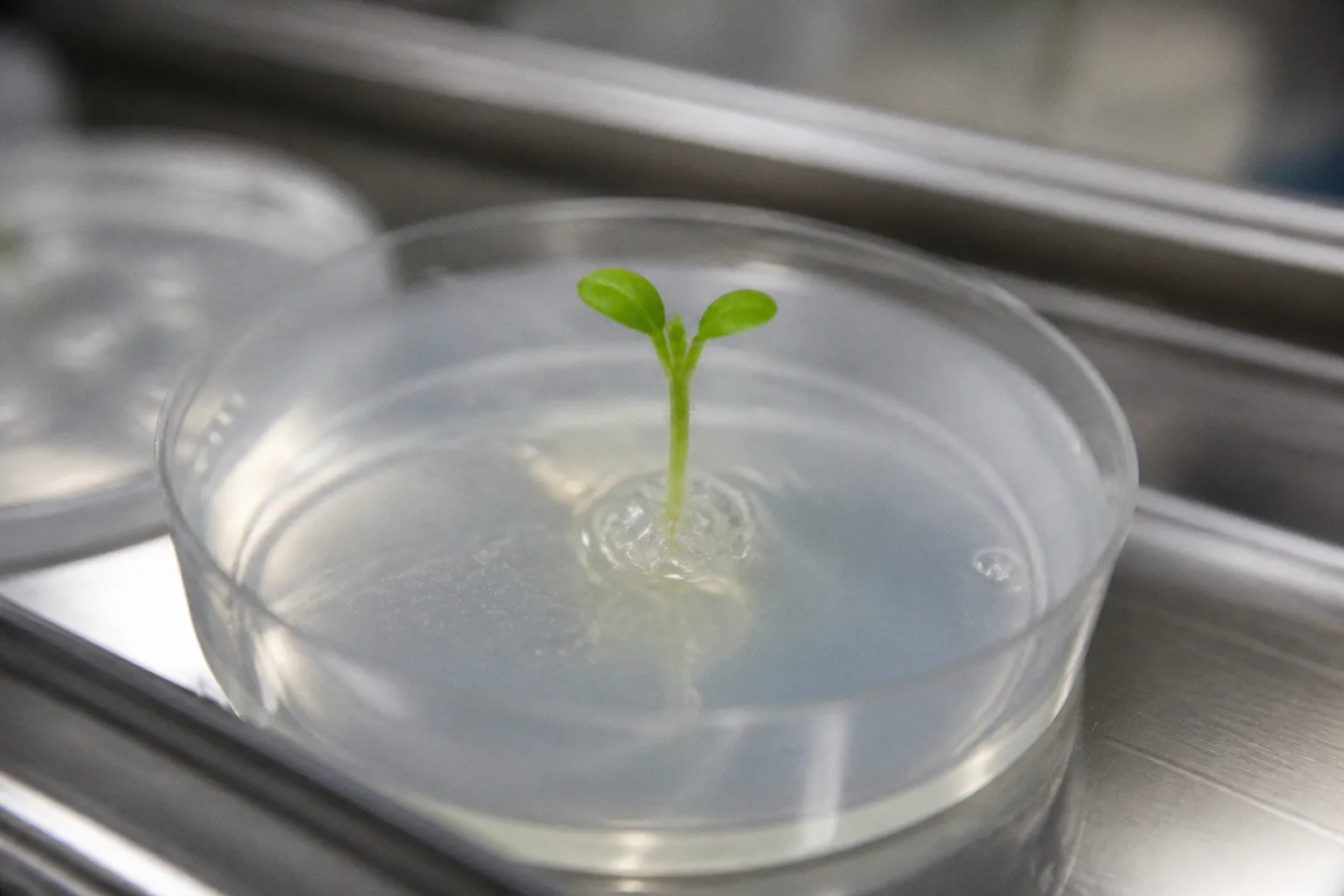
Cells are increasingly being treated as systems that can be measured, modified, tested, and iterated at scale.
That does not make life equivalent to software. The comparison is useful only up to a point, and beyond that point it becomes dangerous. Software runs in a controlled computational environment. Biology runs in tissues, immune systems, microbial ecosystems, manufacturing facilities, and evolutionary time. Its outputs are conditional. A gene edit that works in a cell line may fail in a patient. A protein that folds in a model may behave differently in a living organism. A synthetic circuit can be precise in one context and unstable in another.
Still, the direction of travel is clear. Synthetic biology, genome editing, automated laboratory systems, and AI-assisted molecular design are compressing the distance between a biological hypothesis and an engineered test. The result is not fully programmable life. It is a more programmable biological development process.
That distinction matters. It is where the real transformation is occurring.
From biological discovery to computational design
For much of modern biotechnology, discovery was organized around observation. Researchers identified a biological mechanism, developed a model, ran experiments, and gradually narrowed the field of plausible interventions. The process was slow because the design space was enormous. A protein sequence can vary across an astronomical number of combinations. A cell’s response depends not merely on DNA, but on regulation, environment, timing, delivery method, and interactions with other cells.
Computational biology changes the order of operations. Instead of beginning with an uncontrolled biological search, researchers can increasingly use data and models to select more promising candidates before they enter the laboratory.
This is the operational core of the new paradigm:
1. Measure biological systems at greater resolution. Sequencing, structural biology, imaging, and high-throughput assays generate large datasets on genes, proteins, pathways, and cell states.
2. Build predictive or generative models. Machine-learning systems identify patterns in protein sequences, molecular structures, functional labels, and experimental outcomes. More advanced systems can propose new molecular candidates rather than merely classify known ones.
3. Construct the candidate. DNA synthesis, cell engineering, automated assembly, and increasingly standardized laboratory workflows turn a computational output into a physical biological object.
4. Test under real constraints. The laboratory remains the decisive layer. Models can rank candidates; they cannot eliminate the need to measure toxicity, specificity, expression, delivery, stability, or long-term behavior.
5. Feed the result back into the system. Failed experiments are not merely failures. In a well-designed platform, they become training data for the next design cycle.
This feedback loop is the industrial significance of computational biology. It shifts biotech from a sequence of isolated research projects toward a continuously improving design-and-validation engine.
Biology is becoming more engineerable not because uncertainty has disappeared, but because uncertainty can be mapped, tested, and narrowed faster.
That has direct implications for ai-driven drug discovery. The critical advantage is not that an algorithm produces a finished medicine. It is that computational systems can reduce wasted laboratory work by prioritizing candidates, identifying structural constraints, and organizing experimental results into reusable knowledge. In practical terms, this changes the economics of exploration.
A research organization that can run tighter cycles between model, experiment, and manufacturing will accumulate an advantage that is difficult to see in a single publication. Its advantage is not one model or one molecule. It is the feedback architecture.
The CRISPR evolution: from borrowed bacterial machinery to designed editors
CRISPR was the first widely visible proof that biology could be edited with something approaching an engineering workflow. Genome editing itself is straightforward in definition: changing DNA by removing, adding, or replacing sequence at a target site. The complexity resides in doing it selectively, efficiently, and safely in the relevant cells.
CRISPR changed the field because it made targeted editing simpler, faster, cheaper, and more accurate than older editing approaches. It converted a bacterial defense mechanism into a modular research tool. That modularity created the first major wave of the crispr evolution: researchers could alter targets by changing guide sequences rather than rebuilding an entirely new molecular system for each task.
But natural CRISPR systems were never the endpoint. They were a starting library.
The next phase is the search for editors with different properties: smaller size, altered target recognition, different delivery compatibility, changed specificity profiles, or the ability to support functions beyond cutting DNA. Base editing, for example, aims to alter individual DNA letters without creating the same type of double-strand break associated with conventional editing approaches. Other systems are being explored for transcriptional control, epigenetic modification, RNA targeting, and broader forms of genetic regulation.
AI now expands the search space beyond known natural examples. A 2025 study of the AI-designed programmable editor OpenCRISPR-1 illustrates the shift. Researchers mined more than one million CRISPR operons from 26 terabases of assembled genomic and metagenomic data. Their models generated substantially more candidate protein clusters across CRISPR-Cas families than existed in the study’s natural reference atlas: 4.8 times as many.
Several generated editors showed activity and specificity comparable to, or better than, SpCas9 in the reported experimental settings. OpenCRISPR-1 was also reported as compatible with base editing.
The immediate conclusion should be restrained. This is a research advance, not an approved human therapy. It does not establish that AI-designed editors are universally safer, more precise, or more clinically useful than natural ones. It establishes something else: the design space of genome editors is no longer limited to the tools evolution happened to preserve and scientists happened to discover.
| Parameter | Natural-editor discovery model | AI-assisted editor design model |
|---|---|---|
| Starting point | Known organisms and observed CRISPR systems | Natural datasets plus generated candidate sequences |
| Search constraint | Limited by sampled biological diversity | Expanded into plausible but previously unseen sequence space |
| Primary bottleneck | Finding and characterizing new natural systems | Validating generated systems in robust laboratory assays |
| Main opportunity | Exploit evolved molecular machinery | Tune editors toward particular technical constraints |
| Main risk | Overgeneralizing from one natural tool | Mistaking computational plausibility for biological performance |
This is where biotech industry analysis often goes wrong. It treats AI as a replacement for experimental science. In reality, AI increases the volume of hypotheses that require disciplined experimental filtering. The bottleneck moves. It does not vanish.
A model can generate thousands of plausible editors. The decisive question becomes whether laboratories can test them with enough rigor, in the right cellular contexts, with sufficiently robust readouts. Data infrastructure, assay quality, automation, and reproducibility therefore become as strategically significant as model architecture.
Casgevy: the clinical threshold is real, but narrow
The clinical translation of gene editing has already crossed a meaningful threshold. On December 8, 2023, the U.S. Food and Drug Administration approved Casgevy and Lyfgenia, the first cell-based gene therapies for sickle-cell disease in patients aged 12 years and older. Casgevy was the first FDA-approved therapy using CRISPR/Cas9 genome editing.
Its mechanism is precise in concept. The treatment uses a patient’s own hematopoietic stem cells. Those cells are edited with CRISPR/Cas9 to disrupt expression of BCL11A in erythroid cells, increasing fetal hemoglobin expression. The modified cells are then returned to the patient after a demanding treatment process.
The significance is structural. Casgevy demonstrates that genome editing can pass from laboratory capability to regulated clinical intervention. That is an important proof point for the entire sector.
It is not a general proof that editing is easy.
The therapy’s architecture also reveals the current friction in clinical gene engineering. Autologous cell therapies require patient-specific cell collection, ex vivo manipulation, quality control, conditioning, and reinfusion. Each stage introduces operational complexity. The molecular edit is only one component of the final product.
This is the difference between a biotechnology breakthrough and a scalable medical platform. The first demonstrates possibility. The second must solve delivery, manufacturing, affordability, clinical workflow, long-term monitoring, and access.
For sickle-cell disease, which affects approximately 100,000 people in the United States according to the FDA, the achievement has particular weight. Yet it should not be described as a universal cure for every patient. Regulatory approval establishes that a therapy met a defined standard for a specified population and indication. It does not dissolve the clinical variation between individuals or the burden of the treatment pathway.
The first CRISPR therapy did not make gene editing routine medicine. It made the remaining constraints impossible to ignore.
The long-term value of Casgevy may therefore be less about its singular mechanism than about the operating model it forces the industry to build. It pressures developers to improve cell processing, delivery systems, manufacturing consistency, reimbursement structures, and patient logistics. Those are the enabling layers for the next generation of therapies.
The most consequential future applications may not resemble the first approved products. Ex vivo editing is comparatively controllable because cells can be examined before infusion. In vivo editing, where molecular tools must reach the right tissue inside the body, presents a more difficult systems problem. Delivery vehicles, immune reactions, tissue specificity, dosage, and durability all become tightly coupled variables.
This is why the phrase “programmable medicine” should be used carefully. The genetic instruction may be programmable. The medical intervention remains an integrated biological and industrial system.
Synthetic cells expose the limits of the software analogy
Synthetic biology is often described as the effort to redesign organisms for useful purposes by engineering new abilities. Its applications extend across medicine, manufacturing, agriculture, environmental sensing, and bioremediation. But there are two distinct approaches hiding under that broad label.
The first modifies existing living cells. These cells bring powerful native capabilities: metabolism, replication, sensing, and adaptation. They also bring complexity. Their internal regulation may interfere with a designed pathway. They may evolve away from an engineered function. They respond to environmental changes in ways that are not always predictable.
The second approach constructs cell-like systems from simpler components. These synthetic-cell systems are not necessarily living organisms. Their value lies partly in reduced complexity. By stripping away many of the features of a full cell, researchers can build more bounded and controllable experimental systems.
A 2024 study demonstrated vesicle-based, non-living capsules in which heat-responsive mRNA elements controlled the production of soluble and membrane proteins at defined temperatures. In the membrane-protein configuration, the system enabled temperature-controlled cargo release.
This is not a synthetic organism in the science-fiction sense. It is more useful than that phrase suggests. It is a test of whether biological functions can be assembled into modular, responsive systems with defined inputs and outputs.
The distinction between living engineered cells and cell-free systems is central:
| Design approach | Core advantage | Core limitation | Likely near-term role |
|---|---|---|---|
| Engineered living cells | Can sense, metabolize, grow, and execute complex functions | Biological regulation and evolution create unpredictability | Therapeutics, industrial biomanufacturing, environmental applications |
| Cell-free or synthetic-cell systems | More bounded behavior and simpler control over components | Limited persistence and reduced functional complexity | Targeted delivery, biosensing, controlled biochemical production |
| Conventional biologics | Established development and regulatory pathways | Less adaptable once manufactured | Current therapeutic and industrial baseline |
The importance of synthetic cells is not that they will replace living cells wholesale. It is that they offer a different control surface. In many applications, the goal is not to create something fully alive. The goal is to construct a system that performs one function reliably, then stops.
That is a recurring pattern in the computational biology impact now emerging. Progress does not always mean building more complex biological systems. Sometimes it means removing complexity until the remaining behavior can be characterized and controlled.
The real bottleneck is not design. It is trustworthy synthesis.
As biological design becomes more accessible, the physical layer becomes more consequential. A digital biological sequence is not yet a biological capability. It must be synthesized, delivered, expressed, and validated. Every transition introduces potential failure.
This is why DNA synthesis standards now sit near the center of biotechnology governance. ISO 20688-2:2024, published in March 2024, specifies requirements for the production and quality control of synthesized double-stranded DNA. Its scope includes synthetic gene fragments, genes, and genomes below 10 megabase pairs, covering quality management, biosafety, biosecurity, product quality, and delivered-product specifications.
The standard is not law. It does, however, indicate where industrial practice is moving. As synthesis becomes a foundational input to research and development, the sector needs ways to establish provenance, verify orders, manage quality, and reduce misuse risks without making legitimate work impractical.
This creates a governance problem with three moving parts:
- Capability is diffusing. Better design software and commercial synthesis reduce the distance between a sequence idea and a physical construct.
- Risk is distributed. A harmful or flawed sequence is not only a laboratory problem; it can move through software, vendors, logistics, institutions, and data systems.
- Rules are still evolving. In the United States, Executive Order 14292 in May 2025 directed relevant agencies to revise or replace the 2024 framework for nucleic-acid-synthesis screening. The direction is clear, but exact obligations depend on updated rules and the requirements of specific funders and institutions.
The policy challenge is not simply to impose more screening. A badly designed regime can create structural friction for academic laboratories and small companies while doing little to address sophisticated misuse. A credible framework must be technically informed. It must understand sequence screening, customer verification, quality assurance, data handling, and the differences between ordinary research activity and genuinely elevated-risk requests.
There is also an economic dimension. Standards can become market infrastructure. Suppliers that can demonstrate reliable quality systems, secure order management, and transparent compliance processes may gain trust with pharmaceutical companies, research institutions, and regulators. Over time, the ability to produce biological materials responsibly may become a competitive variable, not merely a compliance cost.
The next biotech platform will be built around closed loops
The strongest synthetic biology trends are converging around a single operating principle: closed-loop design.
AI proposes a protein, editor, pathway, or regulatory sequence. Automated systems construct it. High-throughput assays measure the result. The data then refine the model. This cycle can run across multiple scales, from molecular function to cell behavior to manufacturing performance.
The strategic question is not whether a company uses AI. That is rapidly becoming a baseline claim. The question is whether it owns, accesses, or can generate the experimental data needed to make AI useful.
Machine-learning methods for protein design are commonly organized around sequence information, structural information, and functional labels. Each is incomplete on its own. Sequence data may reveal evolutionary patterns but not enough about real-world function. Structural data can clarify physical constraints but may not capture cellular context. Functional labels are often sparse, noisy, or difficult to standardize.
The next generation of systems will need multimodal models, stronger benchmarks, large-scale assays, and laboratory automation. In other words, computational advances will increasingly depend on physical experimental capacity.
This creates a likely separation in the market. Some firms will market models. Others will build compound systems: proprietary data, specialized assays, robotic laboratories, manufacturing knowledge, clinical programs, and regulatory experience. The latter category is harder to replicate because its learning compounds across every iteration.
There is a parallel here with semiconductor technology. Chip design software is indispensable, but the highest barriers often sit in fabrication, process control, supply chains, and yield learning. Biotechnology is developing a similar structure. Molecular design may become widely available. Reliable biological production will remain scarce.
That scarcity is not a defect in the model. It is the basic condition of working with living systems.
Programmable life will remain conditional life
The phrase “programmable life” captures a real shift, but it should not become a category error. Life is not being transformed into deterministic code. Biology remains dependent on context: gene regulation, cellular state, tissue environment, immune response, microbial interactions, evolutionary selection, and manufacturing variation.
What is becoming programmable is narrower and more valuable. Researchers can increasingly specify interventions at the level of sequences, proteins, genetic circuits, and cell states. They can search larger design spaces. They can run faster learning cycles. They can convert some biological questions into engineering problems with measurable inputs and outputs.
The cascading effects will reach far beyond medicine. Industrial fermentation can become more targeted. Environmental sensing can become more responsive. Agricultural traits may become more precise. New materials could be produced through engineered biological pathways. The boundary between software, chemistry, and biology will become less distinct in research organizations and supply chains.
But this is not a frictionless transition. Every increase in design capability expands the need for validation, manufacturing discipline, security controls, and public legitimacy. The sector will advance fastest where those layers are treated as part of innovation rather than as obstacles placed after it.
The defining biotechnology breakthroughs are therefore not the ones that make the boldest claim about controlling life. They are the ones that build a reliable bridge between computation and biology.
That bridge is still incomplete. It is already changing what biotechnology can attempt.