Xavier Pennington, Lead Columnist, Systems & Macro-Trends
July 13, 2026 · 11 min read
NASA space exploration missions: what I learned from their data
The James Webb Space Telescope transmitted roughly 235 terabytes of calibrated imaging data within its first year of operations.
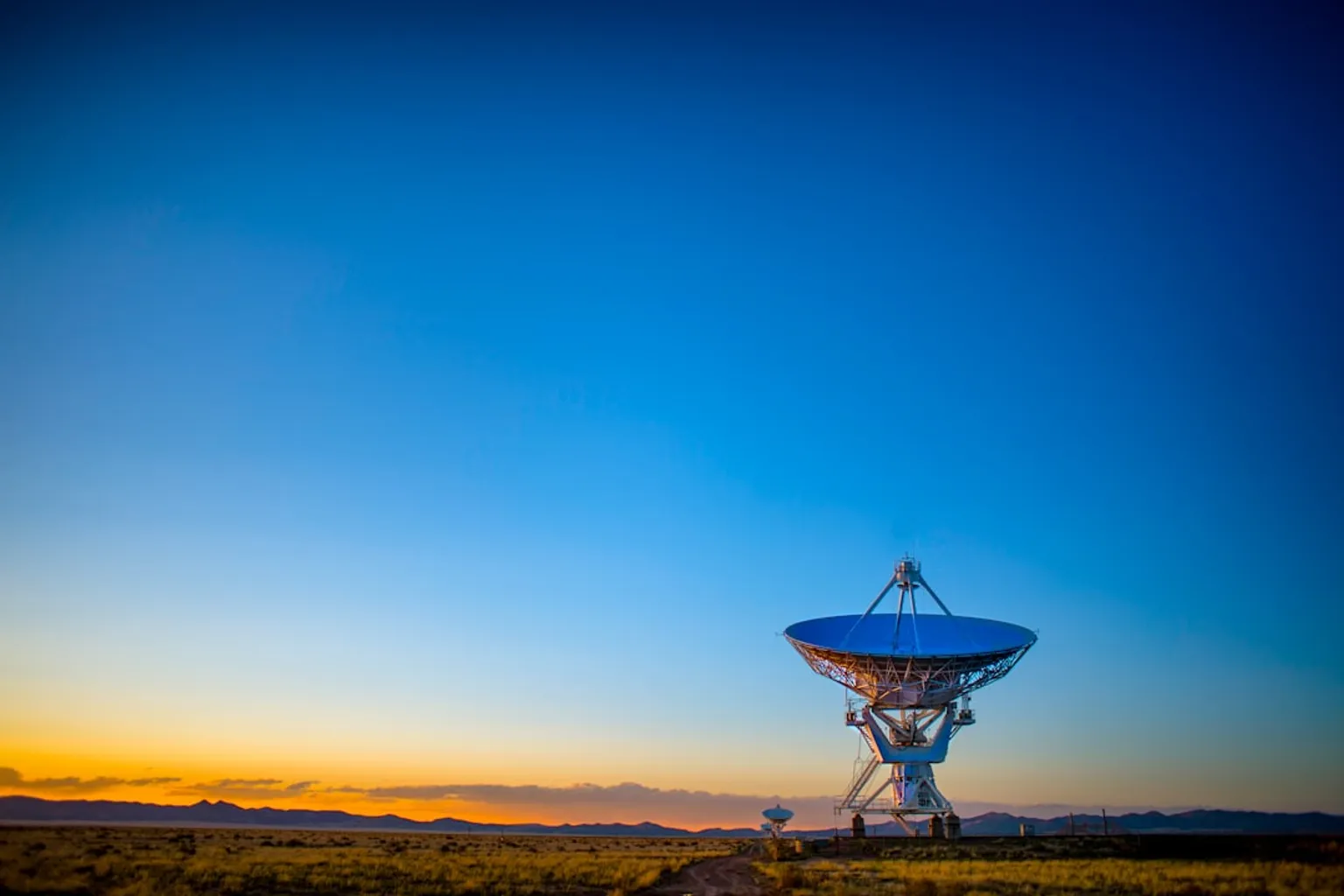
For most of its institutional history, NASA's value chain followed a linear path: design mission, launch instrument, observe, downlink, archive, analyze. That sequence is now collapsing into a continuous feedback loop in which autonomous systems onboard spacecraft process data, flag anomalies, and direct subsequent observations before the original signal reaches ground control. The binding constraint on deep-space exploration is no longer physical reach — propulsion, materials science, and orbital mechanics have solved much of that problem. The constraint is analytical throughput. Understanding what we have already collected has become harder than getting to the next destination.
The Data Revolution: From Observation to Autonomous Discovery
NASA's Open Data Portal now exposes more than 50,000 datasets spanning telemetry, imagery, spectroscopy, and processed scientific products from over 100 active missions. That archive is the operational substrate of the next phase of discovery. The transition from a data-hoarding agency to a data-publishing infrastructure is not merely a transparency gesture; it is the foundation for distributed scientific labor. External researchers, machine-learning pipelines, and citizen-science platforms now perform classification and anomaly-detection work that in-house teams cannot scale to at the required cadence.
Three structural shifts define this transition:
- Observation → classification pipeline. The Kepler mission's photometric dataset, for instance, was processed through a combination of NASA algorithms and crowdsourced platforms, with transit signatures reviewed through distributed analysis before formal cataloguing — a workflow impossible in the pre-internet era.
- Archive → active query system. The Exoplanet Archive functions not as a static repository but as a queryable scientific database, cross-linked to ground-based observations and mission metadata, enabling cross-correlative research that would have required institutional partnerships in earlier decades.
- Static product → live data stream. Many mission products now publish progressive releases rather than final-of-record datasets; calibration data is updated as improved models become available, meaning a "final" dataset in 2026 may differ materially from one published in 2024.
The binding constraint of twenty-first-century exploration is no longer propulsion. It is analytical throughput.
A point worth holding onto: not all of this data is immediately accessible. Significant processing and calibration windows apply, particularly for spectroscopic and high-resolution imaging products. The promise of "open NASA data" is real but structurally uneven, and treating the archive as a real-time firehose overstates what the infrastructure currently delivers.
AI in the Field: How Perseverance and AEGIS Redefine Robotic Science
Perseverance, operating on the Martian surface since 2020, provides the most concrete test case for AI-augmented mission operations. The AEGIS (Autonomous Exploration for Gathering Increased Science) system, developed over more than a decade and refined across earlier rover missions, allows Perseverance to autonomously identify, classify, and target rocks for laser-induced breakdown spectroscopy using its ChemCam instrument.
The mechanism is worth tracing precisely. AEGIS analyzes images from the rover's navigation cameras, identifies geologically interesting targets based on prior training data, and fires the laser without waiting for ground command approval. This is not full autonomy in any meaningful scientific sense — AEGIS does not formulate hypotheses, design experiments, or revise its own targeting criteria in response to unexpected findings. It is a constrained classifier operating within a human-defined framework of what counts as "interesting." The distinction matters because it determines where the human-in-the-loop closure sits: humans still determine what questions to ask; the rover determines when to ask them.
The structural implication is significant. By delegating target selection to onboard systems, mission operations can extend beyond the communication-latency window imposed by orbital geometry. Decisions no longer need to round-trip through Deep Space Network scheduling, which effectively increases the productive science hours per sol by a measurable margin — a hard metric against which mission productivity can now be evaluated.
AEGIS is not a scientist. It is a triage nurse — selecting which cases merit a specialist's attention, but never diagnosing in its own right.
We should resist the temptation to characterize systems like AEGIS as autonomous scientists. They operate within tightly bounded problem spaces and lack the meta-cognitive capacity to question their own classification heuristics. No AI system currently deployed — or credibly on the near-horizon — is capable of independent scientific reasoning without human oversight. The risk of overstating these tools' capabilities lies not in technical failure but in institutional misallocation: budgets directed toward systems promising autonomy they cannot deliver, at the expense of the boring-but-essential data infrastructure work that AI actually augments.
Mapping the Cosmos: Insights from the Exoplanet Archive and JWST
The combined output of the Kepler, K2, and TESS missions has produced the empirical foundation of modern exoplanet science. More than 5,500 confirmed exoplanets, the overwhelming majority detected via transit photometry, populate the NASA Exoplanet Archive. That figure understates the operational catalogue by an order of magnitude: the Archive also tracks candidates, false positives, and multi-planet systems whose confirmation status shifts as new observations resolve earlier ambiguities.
Transit photometry is a deceptively simple technique. A planet transiting its host star produces a characteristic dip in observed brightness; the depth and duration of that dip encode information about the planet's size, orbital period, and (when combined with radial velocity measurements) density. The technique's strength is statistical scalability — Kepler monitored over 150,000 stars continuously for four years, generating a dataset optimized for population-level analysis rather than individual target characterization.
JWST, launched in December 2021, complements that statistical work with targeted spectroscopy. It does not discover exoplanets in bulk; it characterizes their atmospheres, identifying molecular signatures such as water, carbon dioxide, and methane through transmission spectroscopy. This is a different epistemic mode: where Kepler provides the census, JWST provides the case study. The combination produces the layered picture we now have of exoplanet diversity — rocky worlds in habitable zones, gas dwarfs with no solar-system analogue, and atmospheric chemistries that strain existing formation models.
A compact comparison of the primary exoplanet data sources:
| Parameter | Kepler Archive | TESS | JWST Archive |
|---|---|---|---|
| Primary detection method | Transit photometry | Transit photometry | Transit spectroscopy, direct imaging |
| Time-domain coverage | 2009–2018 | 2018–present | 2022–present |
| Output volume | Millions of light curves | ~1 million target stars | Terabytes of spectroscopic products |
| Scientific role | Population census | All-sky survey follow-up | Atmospheric characterization |
| Processing latency | Calibrated final products released | Progressive data releases | Long calibration windows for high-resolution modes |
The structural lesson is that no single mission carries exoplanet science. Each addresses a different layer of the inference problem, and the Archive serves as the connective tissue that turns separate datasets into a coherent scientific instrument in its own right.
The Artemis Era: Leveraging Lunar Reconnaissance for Sustainable Presence
Artemis I launched in late 2022, completing an uncrewed lunar flyby and validating the Space Launch System and Orion capsule architecture. The program's stated objective — sustainable human presence on the Moon by the late 2020s — is a notably different framing from the Apollo era's flag-and-footprint approach. Sustainability implies continuous operations, in-situ resource utilization, and infrastructure that outlasts any single mission.
The Lunar Reconnaissance Orbiter (LRO), operational since 2009, has been the cartographic and resource-mapping workhorse for this effort. LRO's instruments have identified and characterized water ice deposits in permanently shadowed lunar regions, primarily at the south pole. The mechanism is straightforward: LRO's neutron spectrometer and infrared sensors detect hydrogen signatures consistent with trapped volatiles, and that distribution is cross-correlated with terrain models derived from the spacecraft's laser altimeter and high-resolution cameras. Without LRO's decade-plus mapping record, the selection of Artemis landing sites near putative water ice would be operating on geological conjecture rather than measurement. Mission economics shift considerably when resource locations are known to within a few kilometers.
The data flow is bidirectional. Artemis surface assets will feed back into the broader NASA archive, generating high-resolution ground truth for the orbital instruments. The Lunar Reconnaissance Archive is not a static historical record but an evolving input pipeline whose value compounds as mission cadence increases.
A note on framing: "sustainable presence" remains an aspirational designation dependent on budget continuity, technical reliability of the landers and habitats currently under development, and the resolution of political and commercial tensions between NASA and its contracted partners. The data infrastructure is the necessary but not sufficient condition for that goal.
Bridging the Void: The Technical Challenges of the Deep Space Network
The Deep Space Network is the communications substrate of NASA's interplanetary missions, consisting of three primary complexes at Goldstone (California), Madrid (Spain), and Canberra (Australia). The geographic distribution is not redundant for capacity — it is structurally required for continuous line-of-sight to spacecraft as Earth rotates. With only two complexes, any spacecraft beyond Earth orbit would face extended gaps in contact; with three, no gap exceeds a few hours for any current mission.
The data rates the DSN handles vary dramatically with distance. A spacecraft at lunar distance can return data at megabit-per-second rates; a spacecraft at the orbit of Saturn sees bandwidth collapse to kilobit-per-second ranges without aggressive compression and forward error correction. These are not engineering inconveniences — they are hard constraints on what science can be conducted at any given distance, and they set the upper bound on instrument ambition across the entire deep-space portfolio.
Several structural friction points are worth naming explicitly:
- Bandwidth scarcity at outer planets. The limiting factor for missions like the Europa Clipper is not instrument capability but downlink capacity. Higher-resolution instruments without proportional DSN upgrades produce data that cannot be returned within mission lifetime.
- Aging infrastructure. Much of the DSN's hardware was installed in waves between the 1960s and 1990s. Replacement cycles are now measured in decades rather than years, with significant maintenance backlogs.
- Spectrum competition. The DSN operates in allocated radio bands that face increasing pressure from terrestrial telecommunications and from commercial deep-space ventures. Future conflict is structurally embedded in current frequency allocation policy.
- Encryption and data integrity. The proprietary specifics of NASA's deep-space communication encryption are not publicly documented, but the broader principle holds: any compromised telemetry link is a mission-failure vector with no easy remediation path.
The DSN is, in operational terms, a single point of failure for the entire deep-space portfolio. Its modernization is not glamorous and rarely warrants sustained political attention, but it is the substrate without which no AI, no autonomous targeting system, and no onboard data processing produces usable science.
The Structural Verdict
NASA's space exploration missions are no longer best understood as discrete expeditions whose value lies in the rocket launch or the planetary arrival. They are continuous data operations whose productivity depends on the convergence of three subsystems: the instrument (telescope, rover, spectrometer), the autonomous decision layer (AEGIS-class targeting, onboard classification), and the communications substrate (DSN, archive pipelines, public release infrastructure). Each subsystem has its own bottleneck and its own modernization horizon.
The actors that will dominate the next phase of space exploration — and we can already identify the leading candidates — are not those with the largest rockets. They are the ones operating the cleanest feedback loops between observation, analysis, and subsequent observation. NASA's structural advantage lies in its accumulated data archives: tens of thousands of public datasets, an exoplanet catalogue of thousands of confirmed entries, and a planetary surface record spanning decades. That advantage is renewable only if the underlying infrastructure — DSN, calibration pipelines, public release systems — is maintained against the erosive pressures of aging hardware, spectrum competition, and budget cycles that favor hardware milestones over data infrastructure.
What I take from examining this data is a less romantic but more accurate picture: exploration as a throughput problem, not a destination problem. The next decade will not be decided by who reaches Mars first; it will be decided by who can convert collected observations into structured, queryable knowledge faster than the next mission's data backlog arrives. The agency — or the consortium, or the private operator — that wins that race has, in most meaningful senses, already won. The launch is the easy part now.