How the US shapes the world: 250 years of power and policy
For a quarter of a millennium, the United States has run a single, remarkably consistent experiment in global governance — and we now have the dataset to examine it properly.
Xavier Pennington, Lead Columnist, Systems & Macro-Trends·updated July 03, 2026
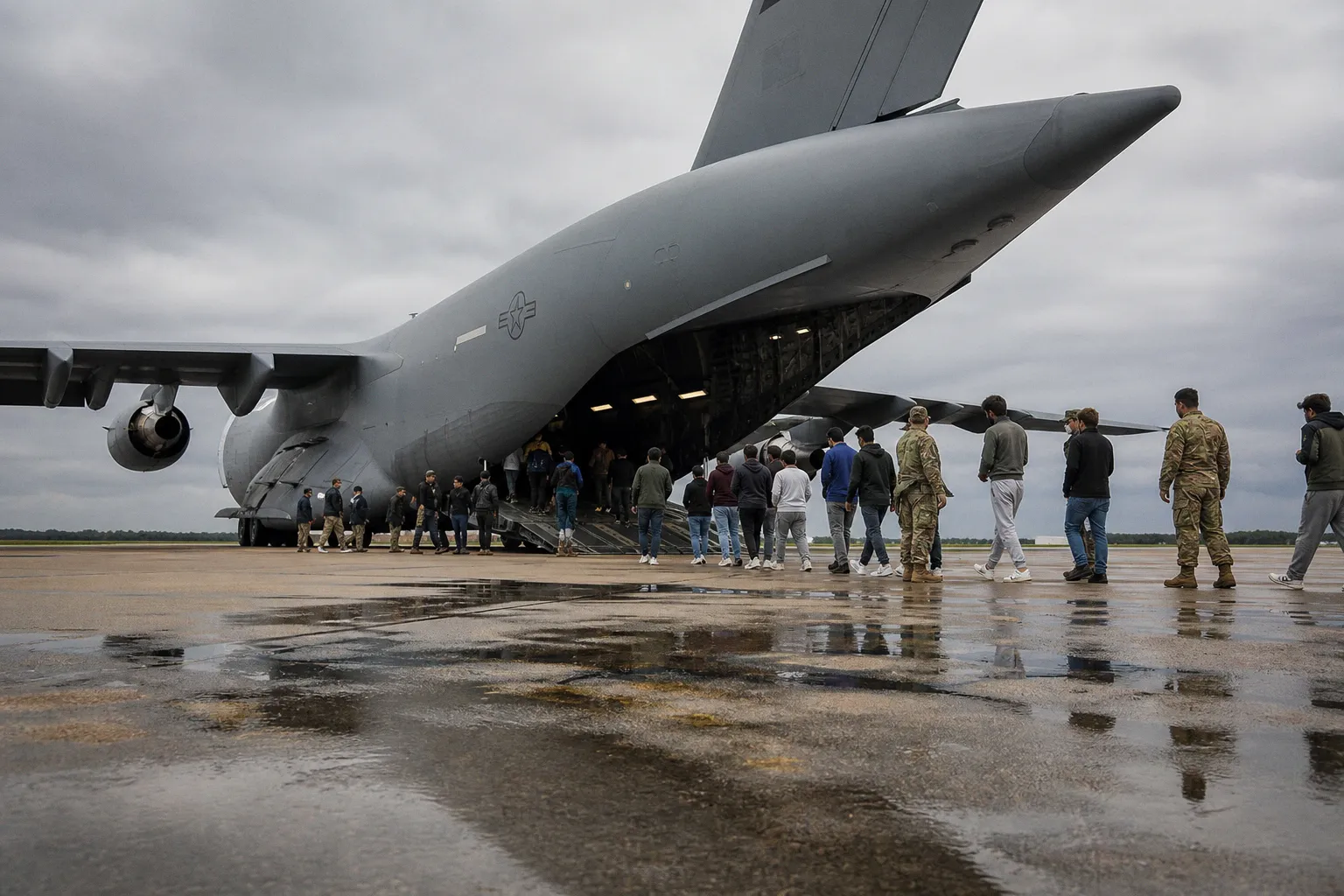
The Architecture of Engagement
Strip the rhetoric from any era — Monroe, Truman, Bush, Biden, Trump — and a consistent structural pattern emerges. US global posture oscillates between two poles: isolationism, which treats foreign entanglements as net-cost liabilities, and interventionism, which frames external engagement as a force-multiplier for domestic stability. These are not opposites; they are feedback loops within a single system. Each surge of intervention eventually produces the structural friction that triggers a pullback — war fatigue, fiscal exhaustion, public skepticism — which in turn generates the conditions for re-engagement.
DW's framing captures this clearly: from Latin America in the 19th century through Vietnam, Iraq, and the contemporary Middle East, the geographic targets have shifted, but the mechanism — projecting hard power to secure economic corridors or ideological alignment — remains intact. The justification has migrated across at least four distinct eras: raw economic interest, anti-communism, humanitarian intervention, and counterterrorism. What I find analytically interesting is that each new justification inherits the institutional infrastructure of the previous one. Counterterrorism did not replace anti-communism; it absorbed its logistics, its alliances, and its legal frameworks.
For related context, see Global South leads energy transition, sustainable development.
The Multilateral Retreat
Here is where the data becomes uncomfortable. The same 250-year arc shows the US as a primary architect of the post-1945 international order — NATO, the Bretton Woods institutions, the UN system, the nuclear non-proliferation regime. These were not acts of altruism; they were structural solutions to the problem of managing a world the US had effectively underwritten. Recent administrations have begun stepping back from multilateral cooperation, and this is the variable worth watching most closely.
The risk is not symbolic. When a hegemon withdraws from the institutions it built, those institutions do not simply pause — they reconfigure around new nodes of gravity. We are already seeing this in trade architecture, in middle-power defense agreements, and in the fragmentation of payment systems. The 500 interventions tell us what US power does when it acts. The multilateral retreat tells us what happens to global stability when it stops acting coherently.
What to Track
For readers mapping this system practically, three indicators will signal which direction the pendulum swings next: the ratio of multilateral commitments to unilateral deployments, the volume of new bilateral security pacts outside NATO frameworks, and the fiscal sustainability of forward-deployed force posture. Each of these is measurable. Each feeds back into the central question DW poses — isolation or engagement — and the honest answer, looking at 250 years of evidence, is that the United States has never truly chosen one. It has simply alternated, and the world has rebuilt itself around whichever version was in power at the time.