Noon Briefing | Secretary-General
113 countries now spend more servicing debt than educating their citizens — a structural inversion that the UN's latest briefings laid bare this week across three concurrent crises.
Xavier Pennington, Lead Columnist, Systems & Macro-Trends·updated July 13, 2026
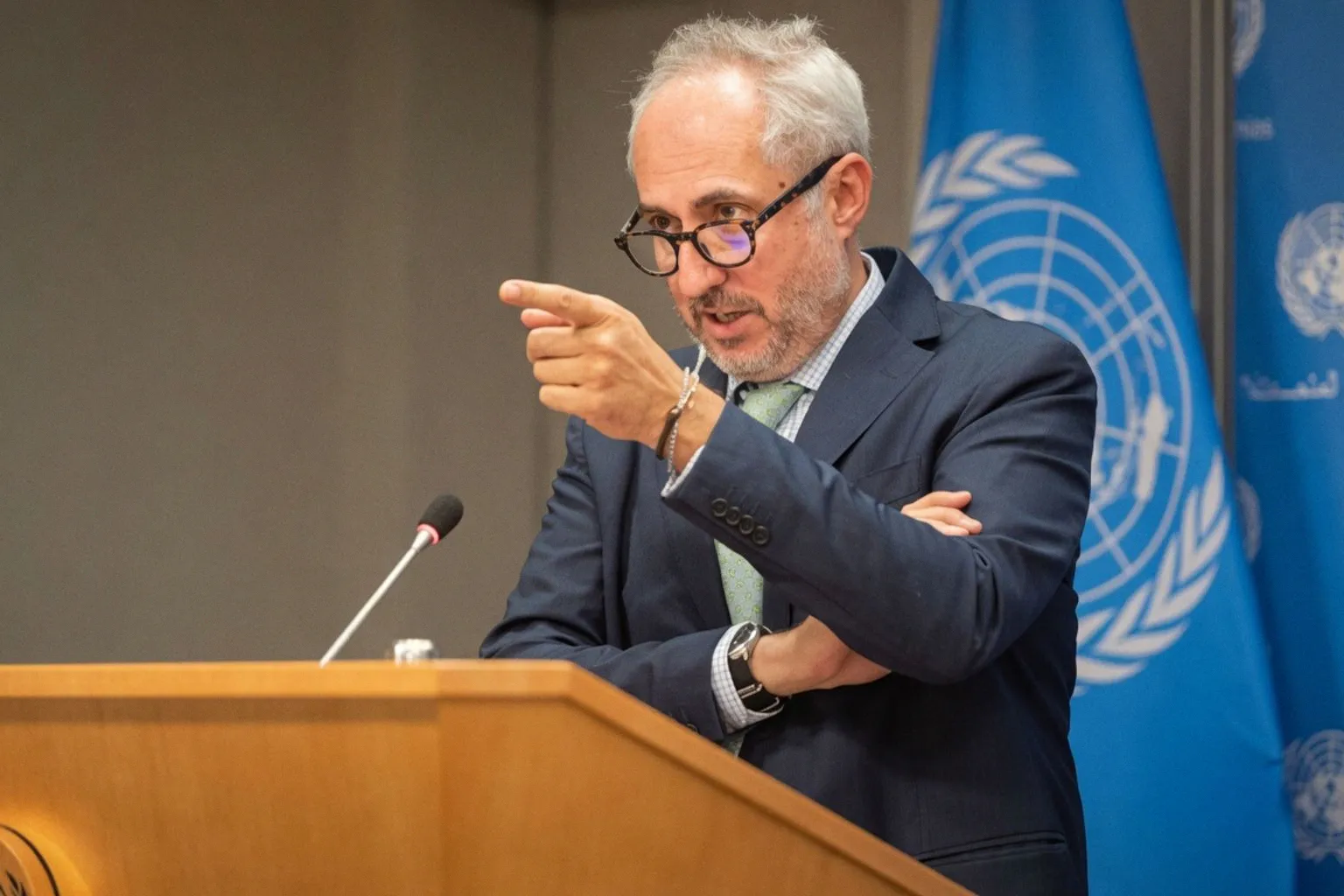
The Financing Feedback Loop
The education summit's central tension is structural: the countries where learning deficits are deepest are precisely those locked into fiscal configurations that make investment impossible. UNESCO's projection of a 30 percent aid decline by 2027 is not a forecast of gradual erosion — it represents a compounding squeeze as sovereign debt obligations crowd out social expenditure. Mohammed's framing of education spending as "an investment in economies" is politically calibrated, but the data behind it exposes a deeper mechanism. When debt servicing exceeds education budgets, the pipeline of human capital narrows, productivity stagnates, and borrowing costs rise further. The feedback loop is self-reinforcing. The summit's concrete recommendations — helping countries break the debt trap — gesture toward solutions, but the structural friction is enormous. Ramaphosa's participation as Co-Chair of the High-Level Committee on SDG4 signals political intent, but intent without fiscal headroom produces communiqués, not classrooms.
A Humanitarian System Under Stress
The UN Women report introduces a parallel compression. Of 855 women-led organizations surveyed across 52 crisis-affected countries — including Afghanistan, the DRC, and Haiti — roughly half face temporary or permanent closure within twelve months. Sixty-five percent report staff working without pay; more than three-quarters have already cut personnel. These are not marginal actors. UN Women describes them as "indispensable first responders" — the ground-level infrastructure of protection, recovery, and community leadership. The loss of a million beneficiaries since January 2025 is not a rounding error; it represents the rapid decommissioning of operational capacity that took decades to build. The report warns the consequences extend beyond immediate humanitarian response into reversals on women's rights and participation in decision-making. When the first responder layer collapses, the system above it — peacekeeping, development coordination, institutional governance — loses its local anchor.
Verification Gaps and Diplomatic Fragility
The Security Council briefing on Resolution 2231 added a third axis of institutional erosion. Under-Secretary-General Rosemary DiCarlo reported that the IAEA has not conducted in-field verification activities under Iran's NPT Safeguards Agreement — a concrete data point, not a negotiating position. While she noted that all parties have expressed readiness to engage diplomatically on the JCPOA framework, the absence of on-the-ground verification creates an information vacuum precisely where precision matters most. Significant differences remain on the path forward, and the gap between stated diplomatic intent and operational transparency is the space where miscalculation breeds. The structure of non-proliferation depends on verification as its load-bearing element; remove it, and the entire architecture becomes aspirational.
What ties these three briefing items together is not thematic coincidence but structural parallelism. Education financing is contracting as debt expands. Humanitarian organizations are dissolving as funding retreats. Verification mechanisms are going dark as diplomatic frameworks stall. Each system is experiencing the same pattern: institutional capacity declining faster than the political will to replace it. The question for observers tracking global governance is not whether these trends will reverse — it is whether the feedback loops have already crossed thresholds where reversal requires orders-of-magnitude more investment than prevention would have cost.