Trump Says He Supports Ukrainian Long-Range Strikes Deep Inside Russia
A NATO summit in Ankara has produced two structurally distinct decisions that, taken together, mark the most explicit American escalation of the Russo-Ukrainian War to date.
Xavier Pennington, Lead Columnist, Systems & Macro-Trends·updated July 09, 2026
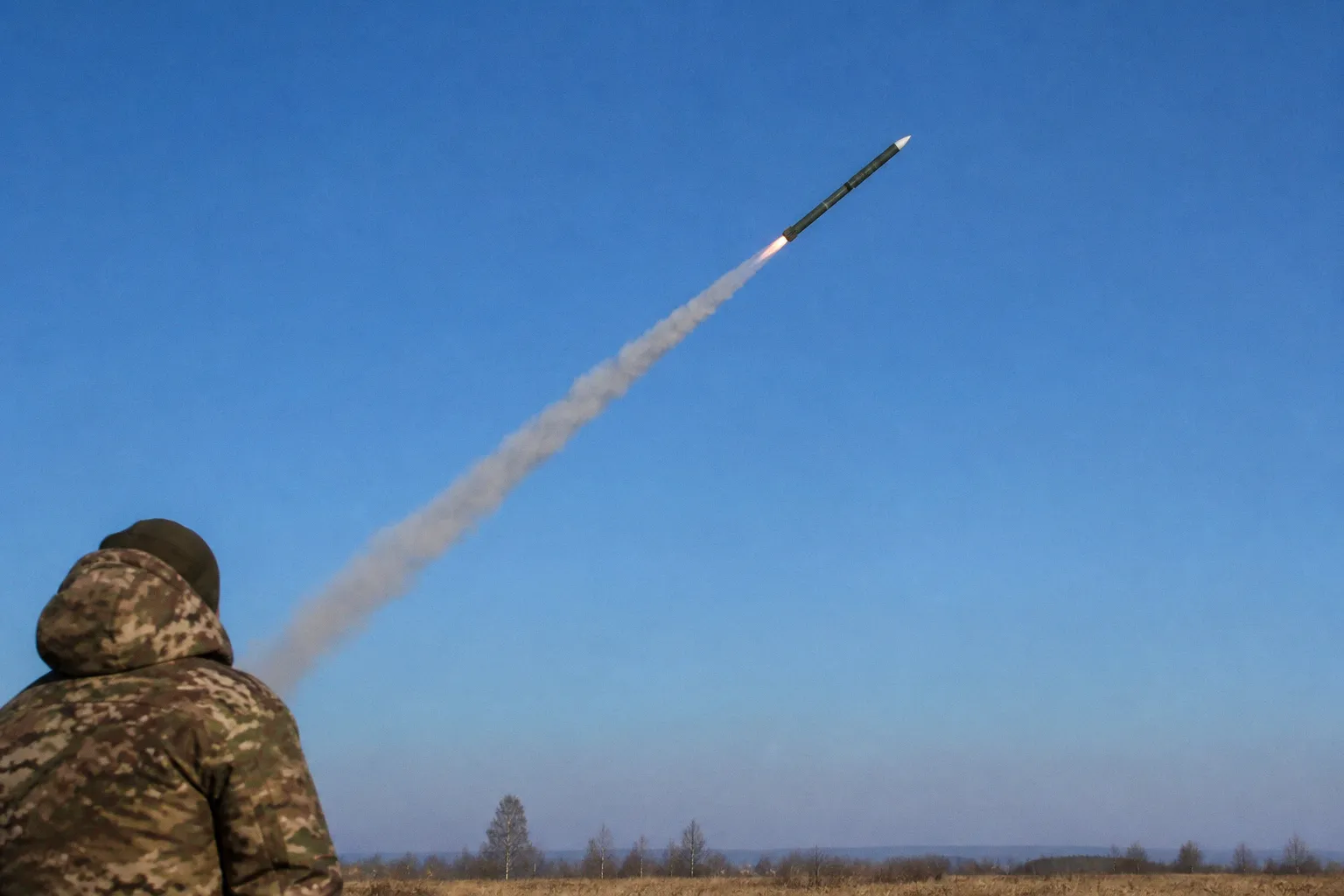
The dual-track authorization
These are not the same lever. Endorsing long-range strikes is a political de-escalation reversal — the U.S. is no longer treating Ukrainian deep strikes as a sensitive boundary, but as a sanctioned instrument of war. Authorizing Patriot production, by contrast, is an industrial commitment with multi-year second-order effects: it shifts supply from transatlantic logistics chains to in-country assembly, reducing the throughput ceiling that has constrained Ukraine's air defense coverage.
The structural friction lies in the mismatch between these two timelines. Deep strikes produce immediate battlefield and diplomatic signals; interceptor production produces a slow-moving constraint release. Watching one without the other produces a distorted read of where the conflict is heading.
Signals worth tracking
Three observable channels will indicate whether this announcement is kinetic or performative:
- Russian doctrine adjustments. Any public shift in Russian force posture — redeployment of high-value assets, hardened dispersal of energy infrastructure, or escalatory nuclear signaling — would confirm that the long-range strike endorsement has been absorbed as a genuine operational threat rather than political theater.
- Production milestones in Ukraine. Patriot manufacturing is not trivial. Physical facilities, component flows, and trained workforce availability will all be constrained by Ukraine's wartime industrial conditions. Concrete facility announcements or partner-nation licensing deals are the leading indicators; rhetoric alone is not.
- NATO burden redistribution. If Alliance members visibly expand their own interceptor inventories or accelerate deliveries to backfill what Ukraine consumes, the escalation has real teeth. If not, the production authorization risks becoming a ceiling without a floor.
The systemic picture
The pairing — offensive latitude plus domestic defense industrial base — resembles a wartime compact more than an aid package. It externalizes a portion of the production risk onto Ukrainian territory while lifting previous restrictions on targeting depth. For markets, diplomatic observers, and analysts of the conflict's trajectory, the question is no longer whether the U.S. is willing to escalate, but how quickly the industrial component can convert authorization into interceptors, and how Russia recalibrates against a doctrine that now explicitly permits striking deep.