ASEAN and EU Green Tech Pact: Removing Trade Barriers for Solar and EVs
Reuters reports that ASEAN and the European Union have signed a green-technology trade protocol eliminating tariffs on solar panels and electric-vehicle components between the two blocs.
Xavier Pennington, Lead Columnist, Systems & Macro-Trends·updated July 18, 2026
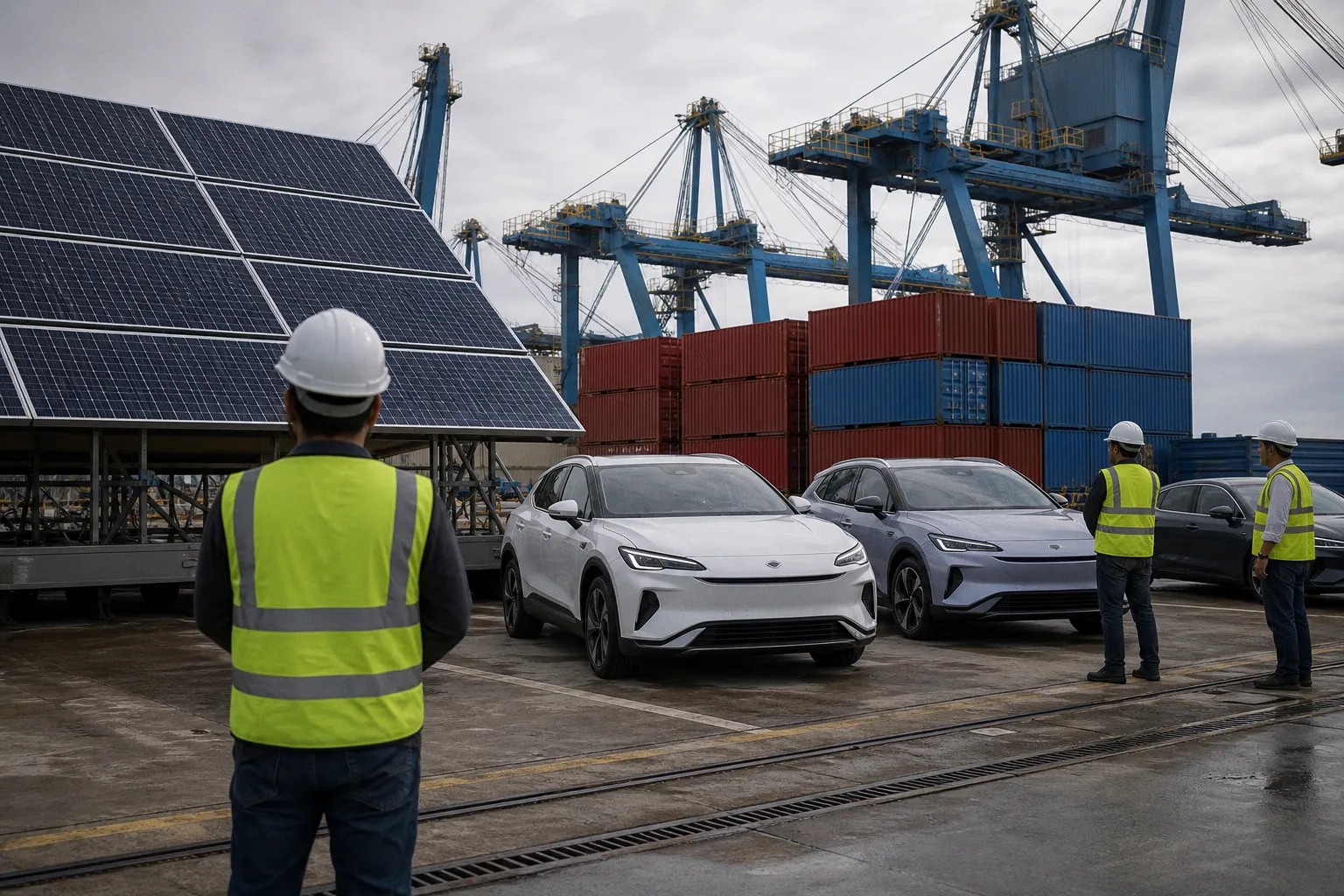
The agreement’s stated purpose is to secure supply chains for the energy transition—a narrow mechanism with potentially broad relevance for the equipment flows behind decarbonisation.
The signal is not simply that another climate-oriented agreement exists. It is that the intervention sits at the component level: the point where industrial policy, trade friction and deployment targets meet.
Tariffs are the protocol’s core lever
The reported terms cover two strategically important product groups: solar panels and components used in electric vehicles. In both cases, the protocol removes tariffs between ASEAN and the EU.
That is a concrete change in the trade architecture, not a general declaration of cooperation. Solar deployment and EV manufacturing depend on chains of equipment and parts that cross multiple borders. The protocol targets one source of structural friction within those chains: tariff barriers between the two trading blocs.
Its stated objective—securing energy-transition supply chains—also matters. Supply security is increasingly treated as a parallel constraint to climate ambition. A market may have demand, technology and policy targets, yet still face bottlenecks in the physical movement of equipment. Removing tariffs does not resolve every constraint, but it directly addresses a cost and access mechanism embedded in cross-border trade.
A supply-chain agreement, not a complete transition plan
The Reuters report identifies the products and the tariff change, but it does not set out further operational detail in the available information. There are no confirmed provisions here on implementation timing, eligible product definitions, volumes, investment commitments or wider environmental conditions.
Those gaps are important. “Solar panels” and “EV components” are broad categories in public discussion but can become highly specific in trade rules. The real test of the protocol will lie in how those categories are defined and applied across supply chains.
For climate and industrial-policy observers, this is the point to track: whether the agreement functions as a usable channel for equipment and components, rather than remaining a high-level trade commitment. The catalyst is clear—tariff elimination. The downstream effects remain unconfirmed.
Why the framing deserves attention
The EU–ASEAN protocol places the energy transition inside a trade-security framework. That framing reflects an underlying systems problem: clean-energy deployment depends not only on end-market demand, but on the reliability of industrial inputs moving through international networks.
It also sharpens a distinction often blurred in transition debates. More clean-energy hardware entering trade channels is not, by itself, evidence of a complete shift in the energy system. The relevant question is how trade rules interact with supply-chain resilience, industrial capacity and the pace at which equipment can be deployed. Recent data on whether the transition is becoming energy addition rather than replacement offers a useful adjacent lens.
For now, the confirmed development is precise: tariffs on solar panels and EV components are being eliminated between ASEAN and the EU, with supply-chain security for the energy transition as the stated aim. The next layer is implementation.