EU Infringement Package July 2026: Enforcement Trends
The European Commission has published its July 2026 infringements package, the monthly enforcement action in which Brussels formally identifies Member States failing to implement, apply, or comply with EU law.
Xavier Pennington, Lead Columnist, Systems & Macro-Trends·updated July 10, 2026
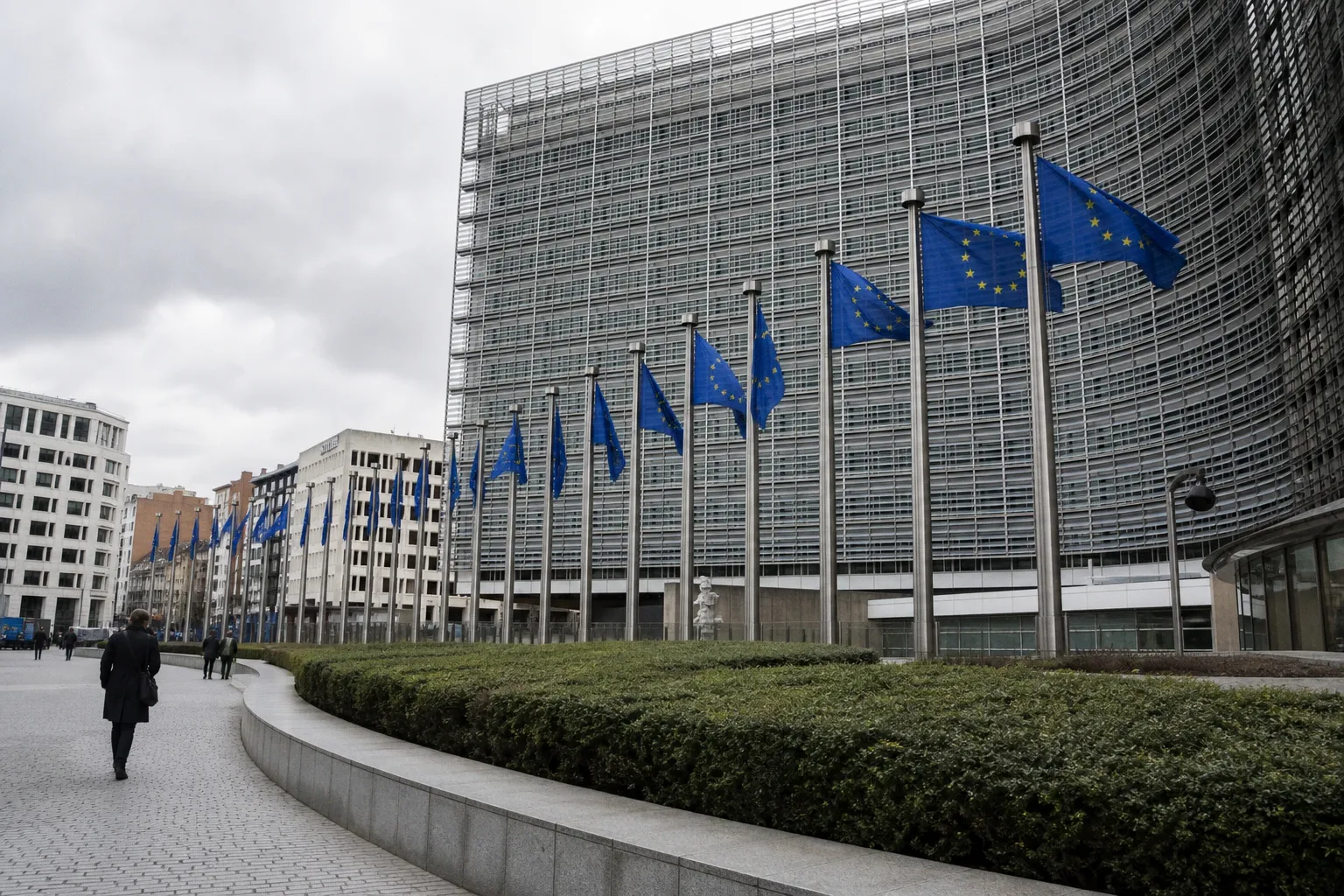
The EU's Enforcement Machinery Fires Again: What We Know About the July Infringement Package
The Infringement Cycle as Structural Feedback
The EU's infringement procedure operates as a layered system of escalating pressure — letter of formal notice, reasoned referral to the Court of Justice, potential financial penalties. Each monthly package bundles decisions at various stages of this pipeline. The July cycle arrives at a moment when the Commission is managing simultaneous enforcement threads across digital markets regulation, energy directive transposition, and environmental compliance, among others.
Without confirmed specifics on which files dominate this month, the structural pattern is worth noting. Infringement packages in mid-2026 reflect a Commission increasingly willing to use formal legal instruments as a feedback loop — converting political friction into binding judicial consequences. This is not new machinery, but the pace and breadth of its application continue to expand.
What This Means for Policy Watchers
For anyone tracking EU regulatory dynamics, the monthly infringement package is a signal layer worth monitoring. It reveals which Commission priorities have stalled at the national level, which transposition deadlines are being missed, and where the gap between Brussels-level legislative ambition and Member State capacity is widening. The July package, by The European Sting's framing of "key decisions," suggests at least some actions carry elevated political or economic significance — though the specifics remain to be fully reported.
The Datasphere Gap
One observation: the available sourcing on this particular package is thin. The European Sting flagged the release; beyond that, granular detail is absent from what's been indexed. This itself is a structural data point. EU enforcement actions are technical, distributed across dozens of policy files, and frequently under-covered until a financial penalty or high-profile Court ruling brings them into mainstream view. The informational asymmetry between the pace of Brussels enforcement and public awareness of it remains one of the quieter frictions in European governance.
Those tracking specific policy domains — digital regulation, the green transition, single market integrity — should watch for the Commission's full release, which will break down decisions by Member State and directive. The headline-level framing tells us enforcement continues. The details, when they land, will tell us where the friction is deepest.
The European Sting's coverage of the July package is available on their platform, where EU policy developments are tracked as part of their ongoing reporting on European affairs.